Operations | Monitoring | ITSM | DevOps | Cloud

Infrastructure Monitoring Tutorial: Getting Started Sending Prometheus Metrics

This Logz.io Infrastructure Monitoring tutorial will cover how to get started with our latest product, our new Prometheus-as-a-Service metrics solution that’s based on Prometheus. Engineers monitor metrics to understand CPU and memory utilization for infrastructure, duration and serverless execution, or for network traffic. For more advanced metrics monitoring operations, teams can send custom metrics to monitor signals like the number of active users.

The Easiest Way to Monitor Ruby: Automatic Instrumentation

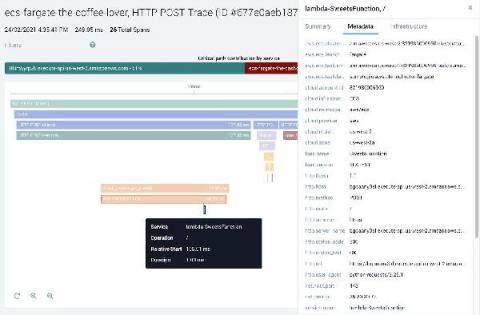
Setting up a proper monitoring overview over your application’s performance is a complex task. Normally, you’d first need to figure out what you need to monitor, then instrument your code, and finally make sense of all the data that has been emitted. However, with a few things set in place, and an APM that natively supports Ruby, it’s easier than ever to take this step. In this post, we’ll show you how you can do it too.

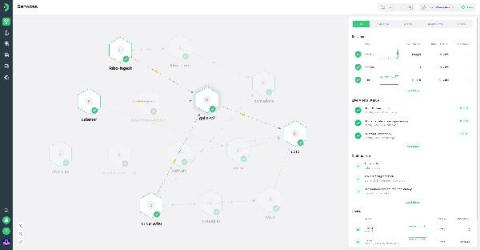
Announcing the All-new Kamon APM Service Map

Kamon APM wakes up today with a new home page for all your observability data: the all-new Kamon APM Service Map! The Service Map shows a real-time representation of all your microservices and the dependencies between them, combined with health status and easy access to the most important bits of data from your entire infrastructure.

Network Throughput vs Bandwidth and How to Measure It

Have you ever used the term bandwidth? Probably. Have you ever used the term network throughput? Maybe. Have you used them interchangeably? Most likely. So let’s see where we get these mixed up. Namely, let’s look at the key differences between network throughput and bandwidth. And while we’re at it, let’s cover the fundamentals of throughput and how to measure it, so you can keep your network flowing efficiently and cleanly.

Getting Started with OpenTelemetry .NET and OpenTelemetry Java v1.0.0

Recently we announced in our blog post, "The OpenTelemetry Tracing Specification Reaches 1.0.0!," that OpenTelemetry tracing specifications reached v1.0.0 — offering long-term stability guarantees for the tracing portion of the OpenTelemetry clients. Today we’re excited to share that the first of the language-specific APIs and SDKs have reached v1.0.0 starting with OpenTelemetry Java and OpenTelemetry .NET.

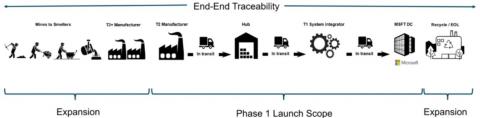
How Microsoft Used Splunk's Ethlogger to Turn Blockchain Data Into Supply Chain Insight

The way we ‘data’ is about to change, and Splunk’s Connect for Ethereum (aka EthLogger) is helping organizations to adapt. Splunk Connect for Ethereum enables organizations of all sizes to investigate, monitor, analyze and act upon their rapidly growing blockchain data sets across multiple chains.

Elastic named a Leader in the 2021 GigaOm Radar on Cloud Observability

We are thrilled that Elastic has been recognized as a Leader and a Fast Mover in the 2021 GigaOm Radar Report for Cloud Observability. GigaOm Radar reports offer a forward-looking view of the market and are designed to help IT decision makers evaluate solutions with an eye to the future. Their analysts consider not just where the solutions are today, but also how the market is evolving and where the solutions are headed relative to that trend.