Operations | Monitoring | ITSM | DevOps | Cloud

Dashbird Explained: the why, what and how

Here’s everything you need to know to get started with Dashbird – the complete solution for End-to-End Infrastructure observability , Real-time Error Tracking, and Well-Architected Insights. When working with AWS, One cannot emphasize enough the architectural best practices for designing workloads. One of those best practices is to design the solution in such a way that the monitoring of infrastructure and troubleshooting of errors and problems is achieved effortlessly.

Read active log files more quickly and easily with the new filestream input in Filebeat

With Elastic 7.14, the filestream input, the successor of log input, is now generally available in Filebeat. This new, superior input provides better support for reading active log files, with faster reaction time when there is backpressure in the system, quicker registry updates, better cooperation with external log rotation tools, and more.

CDN Observability - Why You Must Monitor Your Extended Infrastructure

The content delivery network (CDN) has been an integral part of application infrastructure for more than two decades. A CDN is critical to the end-user experience, but it is no longer considered to be just a caching server. It has evolved to provide security from cyber threats, including DDOS attacks along with front end optimization. Although CDN services are now an indispensable part of any application infrastructure, visibility into CDN performance remains limited.

Kubernetes observability challenges in cloud-native architecture

Kubernetes is the de-facto platform for orchestrating containerized workloads and microservices, which are the building blocks of cloud-native applications. Kubernetes workloads are highly dynamic, ephemeral, and are deployed on a distributed and agile infrastructure. Although the benefits of cloud-native applications managed by Kubernetes are plenty, Kubernetes presents a new set of observability challenges in cloud-native applications. Let’s consider some observability challenges.

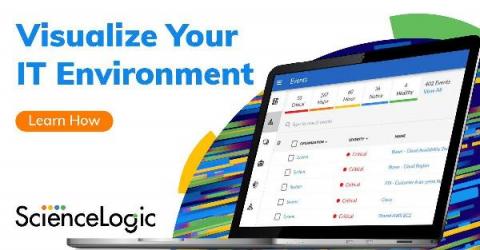
The Importance of Visualizing Your IT Environment

Most everyone has some source of information on the health of their environments. Your experts know where to go and what to do when you get those cryptic messages and log files. To those content with the deep knowledge and where events and log files supply you with everything you need, I applaud you – you belong to a rare breed. Combing through logs or events takes time and effort, and rarely does it yield the speediest “return-to-service” solution.

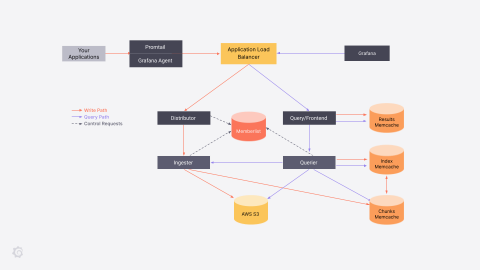
A guide to deploying Grafana Loki and Grafana Tempo without Kubernetes on AWS Fargate

At Seniorlink, we provide services and technology to support families caring for their loved ones at home. In the past two years we’ve expanded our programs across the United States, and so our need to observe our application systems has grown too.

The latest Github outage and how it impacts observability

Every now and then, issues occur that disrupt the very fabric of global software engineering. Chief amongst them is the recent mass outage of Github. Github is a fundamental building block in software productivity, hosting over 190 million code repositories. Github hosts our code and libraries, runs build pipelines, and much more. It is a central hub of activity and it is consumed by tens of thousands of organizations.

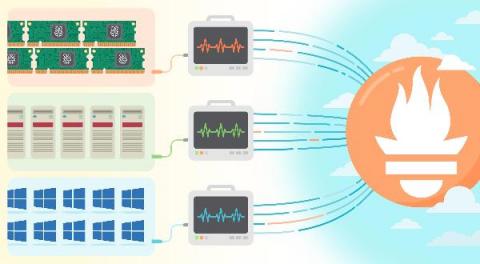
Sysdig offers remote write and more custom metrics for its managed Prometheus service

We are excited to announce that Prometheus Remote Write functionality is now generally available in Sysdig Monitor. This feature allows Prometheus users to easily push metrics directly from their Prometheus servers to Sysdig’s Managed Prometheus Service. Sysdig Monitor provides not only a scalable long term storage solution for custom metrics but also radically simplifies Prometheus monitoring.

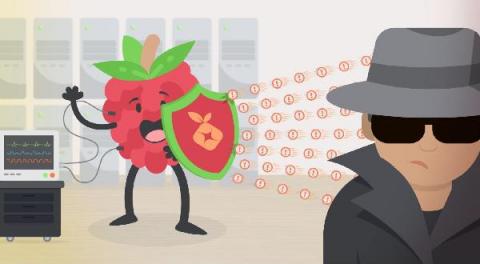
Monitoring Pi-hole: Having your Raspberry Pi, and eating it with Prometheus remote write!

Last year we cooked a holiday ham using Sysdig. Honestly, just revisiting that makes me hungry, but it got me thinking. What about dessert? Today, I’d like to discuss baking a pie and eating it with Prometheus Remote Write. But not just any pie: a Raspberry Pi. Specifically, I’d like to introduce you to Pi-hole, an open-source project that has become very popular in the community. In this article you’ll learn how easy is Monitoring Pi-hole with Prometheus Remote Write.

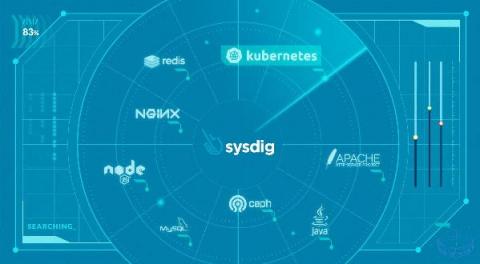
No pain... More gain! Sysdig Monitor radically simplifies monitoring integrations based on open source

Monitoring services and applications in just a few clicks – that’s the dream of every SRE and developer, but this is very difficult because most applications don’t expose metrics in a standardized format. This article will introduce the current pros and cons of the Prometheus exporters ecosystem and how we leveraged the power of the open-source exporters in Sysdig to radically simplify the user experience to allow you to monitor your applications in just a few clicks.