Operations | Monitoring | ITSM | DevOps | Cloud

New Relic vs. Appdynamics vs. Scout APM

New Relic and Appdynamics were the two most dominating APMs in the software industry some years back. But after the advancement of technology, software monitoring tools started capturing the market. Due to some lack of functionalities, customers have begun switching to different tools because now they have a perfect solution for their particular use case.
Flask Application Manual Instrumentation for Distributed Traces

In this blog series, we share the application instrumentation steps for distributed tracing with OpenTelemetry standards across multiple languages. Earlier, we covered Java Application Manual Instrumentation for Distributed Traces, Golang Application Instrumentation for Distributed Traces, Node JS Application for Distributed Traces, and DotNet Application Instrumentation for Distributed Traces. In this blog post, we are going to cover.

Diagnosing Downtime, Made Easy with Uptime.com

Downtime is one diagnosis you don’t want to waste time with second opinions. You want accurate alerting the first time around, followed by drill-down tools to uncover and help you treat root cause as fast as possible. As with any form of health (even domain health), preventive care should always be your first defence. With Uptime.com “preventive care” means 360º monitoring that doesn’t skimp on analysis.

Sponsored Post

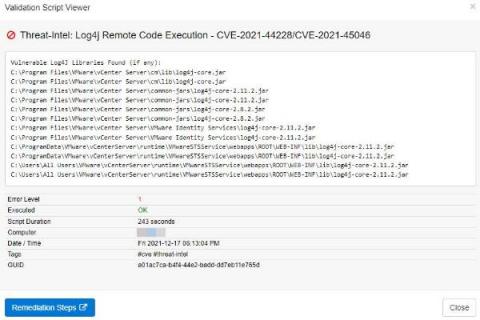
Discovering vulnerable Log4J libraries on your network with EventSentry

Just when the Microsoft Exchange exploit CVE-2021-26855 thought it would win the “Exploit of the year” award, it got unseated by the – still evolving – Log4J exploit just weeks before the end of the year! Had somebody asked Sysadmins in November what Log4J was then I suspect that the majority would have had no idea. It seems that the biggest challenge the Log4J exploit poses for Sysadmins is simply the fact that nobody knows all the places where Log4J is being used.

Get the most out of kiosk devices while securing them using MDM

There’s a good chance we all interact with kiosks just as much as we do with humans, and this was true even before the pandemic. Self-service counters, airline check-in systems, library search devices, huge digital billboards for advertising, compact mobile devices for remote workers, ATMs at every corner, you name it.

Introducing the Sensu pipeline resource

Sensu’s observability pipeline includes resources for collecting, filtering, transforming, and processing observability data: checks, event filters, mutators, and handlers. These resources and Sensu’s observability pipeline concept are well seasoned and widely used at thousands of companies. However, configuration can be somewhat unintuitive, especially for new users.

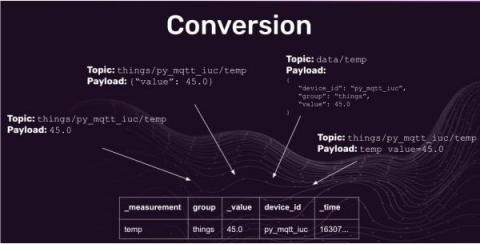
MQTT Topic and Payload Parsing with Telegraf

Buckle up, this one isn’t short…but I’m hoping it will be thoroughly informative! This post is about Telegraf as a consumer of MQTT messages in the context of writing them to InfluxDB. If you are interested in and unfamiliar with Telegraf, you can view docs here. Unsure if Telegraf aligns with your needs? I make a case for it in the Optimizing Writes section of this blog post. It may also help to have an understanding of Line Protocol, InfluxDB’s default accepted format.

The Top 25 Grafana Interview Questions

If you are looking for your next role which involves an in-depth knowledge of Grafana then you will want to make sure that you have revised sufficiently beforehand. In this resource guide on the top Grafana interview questions, we've listed all of the leading questions that candidates are commonly asked about this popular visual analysis tool alongside the answers you’ll need to pass. Want to improve your knowledge even further?

What is the Purpose of Observability? In a Word, Innovation

Asking an IT engineer or SRE to define the purpose of observability is kind of like asking someone to explain the purpose of life: There are lots of different opinions out there, and no way of proving any of them right or wrong. You could argue that observability is just a buzzword that refers to what used to be called monitoring.