Operations | Monitoring | ITSM | DevOps | Cloud

Harnessing Distributed Tracing for Application Performance Optimization

Distributed tracing is a powerful technique that allows you to track the flow and timing of requests as they navigate through a system. By linking operations and requests between multiple services, distributed tracing provides valuable insights into system performance and helps identify bottlenecks. In this blog post, we will delve into the benefits of distributed tracing, explore its relevance for various application architectures, and uncover how it operates behind the scenes.

Getting Started with GROK Patterns

If you’re new to logging, you might be tempted to collect all the data you possibly can. More information means more insights; at least, those NBC “the more you know” public services announcements told you it would help. Unfortunately, you can create new problems if you do too much logging. To streamline your log collection, you can apply some filtering of messages directly from the log source. However, to parse the data, you may need to use a Grok pattern.

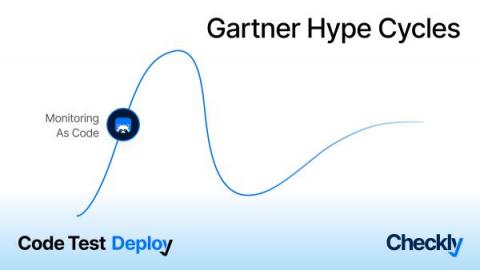
Exciting Times for Monitoring as Code: A Nod from TWO Gartner Hype Cycles

Earlier this week we shared some exciting news. Checkly has made its mark in not one, but two Gartner Hype Cycles reports. We're being recognized for something we're super passionate about - Monitoring as Code (MaC). This recognition comes in the Hype Cycle for Monitoring and Observability and the first ever Hype Cycle for Site Reliability Engineering. It's a big deal for us, and here's why it should matter to you, too.

Monitoring to Ensure Optimal Developer Experience and Productivity

For Software Houses, developers are as important as customers are to a retail organization – if the Developer Experience (DX / DevExp / DevEx) is poor, then work simply will not get done effectively and the best and the brightest are likely to leave for an employer who offers a better experience and hence, more productivity and job satisfaction. Long-term frustrated employees and staff attrition tend to impact product quality and lead to weaker software applications.

Democratizing Data Through Secure Self-Service Concierge Access of Cribl Stream

Ah, the age-old question of how to manage screen time for kids – it’s like trying to navigate a minefield of Peppa Pig, Paw Patrol, and PJ Masks! I mean, who knew Octonauts and Bubble Guppies would become household names? As a dad of two young kids, managing screen time is a balancing act, especially keeping our 5-year-old happy with access to her shows.

Continuous Observability: Shedding Light on CI/CD Pipelines

DevOps is not just about operating software in production, but also releasing that software to production. Well-functioning continuous integration/continuous delivery (CI/CD) pipelines are critical for the business, and this calls for quality observability to ensure that Lead Time for Changes is kept short and that broken and flaky pipelines are quickly identified and remediated.

Thank you, sysadmins, as always!

Happy World Sysadmin Day 2023 Sysadmins are often the last resort when your office system crashes or when the network slows to a trickle. Every July, on the last Friday, professionals worldwide express their gratitude and celebrate our IT heroes, our sysadmins. On July 28, 2023, we thank sysadmins for what they do best: monitoring our IT systems and ensuring they are constantly up, fast, and secure.

Navigating the Serverless Landscape: Lessons from our Tracing Collector API Journey

In the previous blog in this series, we delved into the redesigned architecture of Amazon Prime Video and how they integrated different architectural styles for optimal performance and cost efficiency. We also discussed the impact of Amazon’s decision on the concept of a “serverless-first” mindset, highlighting the importance of considering alternative architectural approaches based on specific use cases and requirements.

IIS Error Logs and Other Ways to Find ASP.Net Failed Requests

As exciting as it can be to write new features in your ASP.NET Core application, our users inevitably encounter failed requests. Do you know how to troubleshoot IIS or ASP.NET errors on your servers? It can be tempting to bag on your desk and problem your annoyance. However, Windows and ASP.NET Core provide several different logs where failed requests are logged. This goes beyond simple IIS logs and can give you the information you need to combat failed requests.