Operations | Monitoring | ITSM | DevOps | Cloud

For Better Software Vendor Management, EUC Teams Need Better Data

Software vendor management is difficult. You've probably experienced it. The service desk is flooded with tickets about a specific application. Employees are frustrated. Your EUC team investigates but can’t find the root cause. So, you reach out to the vendor. Then the inevitable happens: the vendor responds with “Everything is green from our perspective”. Yet, the issues persist. Tickets continue to come in. Frustrations continue to mount.
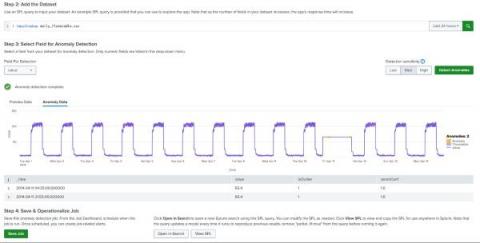
Fastest Time-to-Value Anomaly Detection in Splunk: The Splunk App for Anomaly Detection 1.1.0

Anomaly detection in metrics or time series data is the most used machine learning use case among Splunk Security and Observability customers. Customers are looking for easy-to-use ML-powered high-fidelity anomaly detection, so that they can be alerted at the first sign of a failure point or security incident.

Application Performance Monitoring vs Application Performance Management: Understanding the Differences

Ensuring optimal application performance is a Herculean task tee’d up for today’s IT operations teams. Adding to the confusion is the shared acronym of the two most common practices: While the terms are similar, the approaches and use cases are different.

Lessons learned from integrating OpenAI into a Grafana data source

Interest in generative AI and large language models (LLMs) has exploded in popularity thanks to a slew of announcements and product releases, such as Stable Diffusion, Midjourney, OpenAI’s DALL-E, and ChatGPT. The arrival of ChatGPT in particular was a bellwether moment, especially for developers. For the first time, an LLM was readily available and good enough that even non-technical people could use it to generate prose, re-write emails, and generate code in seconds.

Learn how to monitor Linux computers with Pandora FMS: Full guide

Today, in those much needed training videos, we will delve into the exciting and mysterious universe of basic monitoring of computers with Linux operating systems. Ready to unlock the hidden secrets of your devices? Well, let’s go! Before you dive into this adventure, make sure you have Pandora FMS environment installed and running. Done? Well, now we will focus on how to monitor those Linux computers that allow you to install the software agent devoted to this operating system.

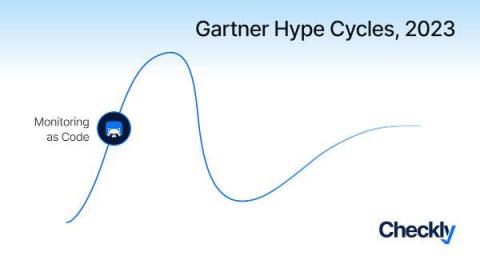
Gartner recognizes Monitoring as Code as emerging practice

I’m thrilled to announce that Gartner added Monitoring as Code (MaC) as an emerging practice into their Hype Cycles for Monitoring and Observability and Site Reliability Engineering. We are extremely hyped about this recognition and being listed as a vendor innovating in that space. Since we founded Checkly, our vision has been that monitoring should be set up as code and live in your repository; it must be open-source based and feel natural for developers.

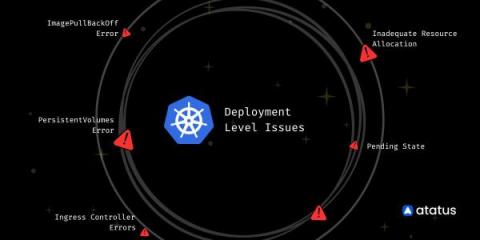
Troubleshooting Kubernetes Deployment at Every Level!

Kubernetes has emerged as the de facto standard for container orchestration, with its ability to automate deployment, scaling, and management of containerized applications. However, even with the best practices and expertise, Kubernetes deployment can sometimes be a complex and challenging process. It involves multiple layers of infrastructure, including the application, Kubernetes cluster, nodes, network, and storage, and each layer can have its own set of issues and challenges.

Elastic Search 8.9: Hybrid search with RRF, faster vector search, and public-facing search endpoints

Elastic Search 8.9 introduces hybrid search with Reciprocal Rank Fusion (RRF) to combine vector, keyword, and semantic techniques for better results. This release also brings performance improvements in vector search and ingestion with response times that are up to 30%+ faster. Users also have more ingestion options with the new SharePoint Online connector, which includes document-level security.

Up to 70% metrics storage savings with TSDS enabled integrations in Elastic Observability

The latest versions of Elastic Observability’s most popular observability integrations now use the storage cost-efficient time series index mode for metrics by default. Kubernetes, Nginx, System, AWS, Azure, RabbitMQ, Redis, and more popular Elastic Observability integrations are time series data stream (TSDS) enabled integrations.