Operations | Monitoring | ITSM | DevOps | Cloud

Unlocking AIOps, Part 2: The build-vs.-buy decision

Hello again! Continuing from our previous blog, in today’s blog we will delve into a crucial decision that organizations often face when considering AIOps implementation—the build vs. buy dilemma. During our LinkedIn Live event on Mapping the impact of AIOps for CIOs, CTOs, and IT managers, we explored the factors to consider when making the build-versus-buy decision and how it impacts an organization’s journey toward efficient IT operations.
12 DevOps Best Practices Teams Should Follow

DevOps is a software development philosophy that helps organizations achieve faster delivery, better quality, and more reliable software, making it easier to adapt to changing business needs and customer demands. However, implementing DevOps can be challenging on many levels. It requires changes in culture, processes, skills, knowledge, and tools, which can encounter resistance from traditional silos within organizations. So, how can you successfully implement DevOps within an organization?

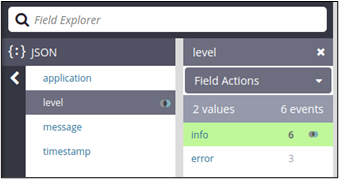
Effective Logging in Node.js Microservices

Many modern software applications are built with a microservices architecture, and Node.js has become the runtime environment of choice for many developers building microservices. However, working with logs in microservices—especially as complex applications comprise dozens (or more) microservices—is a challenging and cumbersome endeavor. Logging is a crucial part of building and maintaining an application.

Microsoft Dynamics Monitoring: CRM Performance Optimization

Microsoft Dynamics empowers enterprises with efficient customer relationship management (CRM) and enterprise resource planning (ERP) capabilities. As organizations increasingly rely on the seamless functioning of Microsoft Dynamics to drive their core processes, the need for robust monitoring practices has become paramount. This is where Microsoft Dynamics Monitoring steps into the spotlight, bridging the gap between uninterrupted productivity and potential disruptions.

How To Monitor AWS EC2 With MetricFire

AWS EC2 (Elastic Compute Cloud) has revolutionized the way businesses operate in the cloud. With its scalable and flexible infrastructure, EC2 allows organizations to easily deploy virtual servers and manage their computing resources efficiently. However, as your EC2 environment grows, monitoring becomes crucial to ensure optimal performance, security, and cost optimization. One powerful solution for monitoring AWS EC2 is Hosted Graphite by MetricFire, a comprehensive graphing and monitoring service.

Prometheus vs. Datadog

Before we do a detailed dive into what Prometheus and Datadog are, let's look at the key comparison points. Both Prometheus and Datadog are monitoring tools, but Prometheus is open source and Datadog is proprietary. Prometheus is the de facto tool for monitoring time-series for Kubernetes, and Datadog is an all-around APM, logs, time-series, and tracing tool.

Building a Scripted Event Collector With Cribl Stream

Cribl Stream provides a robust HTTP REST collector, with many features and options. Still, there are endless combinations that vendors can provide in their API endpoints. Sometimes you may need to take more extreme measures to unlock data stashed begin the API entry point. No worries! Cribl also allows you to run a script to collect that data, and can even help you scale it. In this blog post, we’ll cover how I completed this task for a recent interaction using Qualys.

Understand Your Kubernetes Telemetry Data in Less Than 5 Minutes: Try Mezmo's New Welcome Pipeline

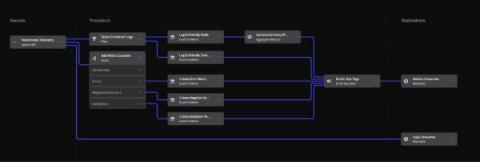
Most vendor trials take quite a bit of effort and time. Now, with Mezmo’s new Welcome Pipeline, you can get results with your Kubernetes telemetry data in just a couple of minutes. But first, let’s discuss why Kubernetes data is such a challenge, and then we’ll overview the steps.

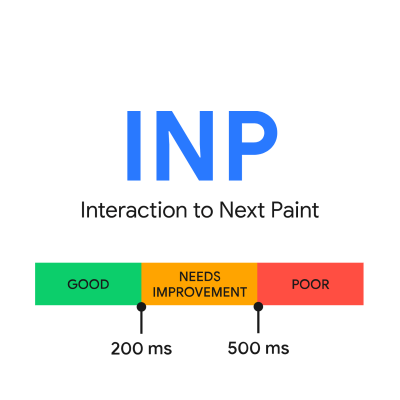
INP - New Metric in Core Web Vitals

In 2020, Google introduced Core Web Vitals (LCP, FID, CLS), officially making them ranking metrics affecting search engine rankings in February 2022. As a next step, in April 2023, Google announced the retirement of several ranking systems (Page experience, Mobile-friendly, Page speed, Secure sites), increasing the impact of Core Web Vitals on rankings.