Operations | Monitoring | ITSM | DevOps | Cloud

Sponsored Post

How important is Observability for SRE?

Observability is what defines a strong SRE team. In this blog, we have covered the importance of observability, and how SREs can leverage it to enhance their business. Observability is the practice of assessing a system's internal state by observing its external outputs. Through instrumentation, systems can provide telemetry such as metrics, traces, and logs that help organizations better understand, debug, maintain and evolve their platforms.

Mist Clears the Way for Multicloud Observability

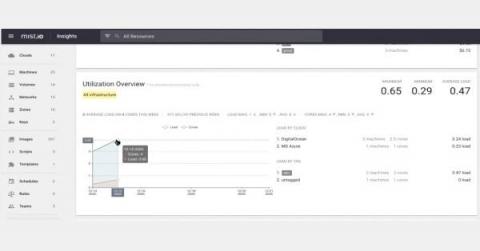
A multicloud strategy is a necessity for modern businesses, as the recent AWS outages made clear, but managing this infrastructure remains a huge challenge. Infrastructure management teams have long struggled to juggle diverse technology solutions, policies and services to get access to a point-in-time view of their resources. The result is either waste through overprovisioning or huge overheads for nitpicking manual management and repetitive tasks.

Ask Miss O11y: Do I Need Observability If My Stack Is Boring?

Observability came out of microservices and cloud-native, right? If you have a simpler architecture, does o11y matter?” — this question came up during recent office hours Yeah, sort of. On both counts—yeah, it sorta came out of microservices and cloud native, and yeah sorta, you need it with a simpler architecture (though perhaps not as desperately as you otherwise might).

Observability Pipelines & AIOps can make IT Smarter

Enterprise data systems are like busy family households. You see a constant flow of activity to varying degrees from room to room. This activity includes people wandering, opening and closing doors. And then there are other streams constantly flowing through the household- electricity, water, Wi-Fi networks and more. In modern enterprises, the data deluge is a critical issue. While we take the complexity for granted in a household, such is not allowed in a connected enterprise.

Observability vs Visibility - what's the difference?

Observability is a new term that’s slowly entered the mainstream over the last two years. Today it’s used in the context of monitoring, but it’s much more than that. And it also goes way beyond visibility. So, in this blog, we set out to explore observability vs visibility and find out, what’s the difference? In a recent podcast, our friends at Riverbed neatly explained that seeing and observing are two different things, and can be compared to hearing vs listening.

Honeycomb + Squadcast Integration: Routing Incident Alerts Made Easy

Honeycomb is an application monitoring tool that helps DevOps and SRE teams to operate more efficiently by offering rich observability solutions and intuitive team collaboration. It helps understand complex relationships within your distributed systems and troubleshoot issues accordingly. Squadcast is an end-to-end incident response tool. Built with an SRE mindset, it streamlines all the incident response activities.

Observability versus monitoring in software development

To supervise the behavior of distributed applications and track the origin of service failures and downtime, developers often use traditional monitoring technologies and tools. However, this approach can fall short in its ability to measure the overall health of modern cloud-native architectures, which can span multiple hosting environments and encompass hundreds of microservices.

Observability for the Software Industry: Top 4 Challenges and How Monitoring Can Help

Software companies face more challenges than ever before to keep pace in an ever-evolving industry that requires innovation and reliability. The pressure to adapt to fast-moving and sophisticated technologies can easily create silos amongst teams and a lack of visibility within organizations. With legacy technology stacks and systems now in the rearview mirror, the focus of large-scale software development has shifted to ensuring standardization and distributed computing in a growingly serverless world.

Interview with Tom Granot - Developer Observability, KoolKits and Reliability

In preparation for the upcoming Developer Observability Masterclass we’re hosting at Lightrun with Thoughtworks and RedMonk, I sat down for a brief interview with Tom Granot – the Director of Developer Relations at Lightrun. Tom will MC the event as he did for the Developer Productivity Masterclass we ran back in December.