Operations | Monitoring | ITSM | DevOps | Cloud

Multi-Cloud Made Simple: Announcing Kentik Observability Enhancements for AWS and Google Cloud

Limited visibility into network performance across multi-clouds frustrates even the best teams. That’s why we’re thrilled to announce enhanced AWS and GCP support for Kentik Cloud, enabling network, cloud, and infrastructure teams to rapidly troubleshoot and understand multi-cloud traffic.

DNS observability and troubleshooting for Kubernetes and containers with Calico

In Kubernetes, the Domain Name System (DNS) plays a crucial role in enabling service discovery for pods to locate and communicate with other services within the cluster. This function is essential for managing the dynamic nature of Kubernetes environments and ensuring that applications can operate seamlessly. For organizations migrating their workloads to Kubernetes, it’s also important to establish connectivity with services outside the cluster.

Shrink your IT budgets, not your observability needs

Are you getting value for every dollar spent on IT monitoring tools? Amidst the prevailing global economic turbulence, budgets are shrinking, and every dollar spent counts. However, Gartner forecasts a 5.1% growth in worldwide IT spending for 2023. Enterprises implement digital technologies to cope with layoffs and keep their systems up. The million-dollar question is: Is the monitoring output worth the cost of the monitoring solution?

Collecting Kubernetes Data Using OpenTelemetry

Running a Kubernetes cluster isn’t easy. With all the benefits come complexities and unknowns. In order to truly understand your Kubernetes cluster and all the resources running inside, you need access to the treasure trove of telemetry that Kubernetes provides. With the right tools, you can get access to all the events, logs, and metrics of all the nodes, pods, containers, etc. running in your cluster. So which tool should you choose?

Observability: Working with Metrics, Logs and Traces

The concept of observability centers around collecting data from all parts of the system to provide a unified view of the software at large. Fault tolerance, no single point of failure and redundancy are prominent design principles in modern software systems. But that doesn’t mean errors, degradation, bugs or even the occasional catastrophe don’t happen.

Customer-Centric Observability: Experiences, Not Just Metrics

Martin and Jess recently conversed with Todd Gardner of RequestMetrics as part of the O11ycast podcast. We don’t normally write blogs based on these conversations, but there were impactful comments in that episode that bear repeating. You can listen to the full conversation if you wish. Let’s get into it!

A Step-by-Step Guide to Standardizing Telemetry with the BindPlane Observability Pipeline

Adding additional attributes to your telemetry not only provides valuable context to your observability pipeline but also enhances the flexibility and precision of your data operations. Consider, for example, the need to route data from specific geographical locations, like the EU, to a designated destination. With a ‘Location’ attribute added to your logs, you can seamlessly achieve this.

Performance Ratings and Experience Scores for Meaningful Alerting and Rapid Observability

Administrators and IT management are increasingly leveraging simple quantifiable KPI indicators such as “Performance Ratings” to gain rapid overviews and track key outcomes. Modern IT architectures are designed and built to scale and be resilient. Systems are now usually built to handle failover and auto-scale up and down to handle varying demand and workloads with very different properties and needs.

What Is a Telemetry Pipeline?

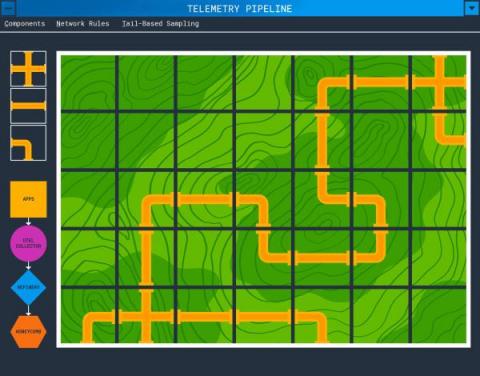
In a simple deployment, an application will emit spans, metrics, and logs which will be sent to api.honeycomb.io and show up in charts. This works for small projects and organizations that do not control outbound access from their servers. If your organization has more components, network rules, or requires tail-based sampling, you’ll need to create a telemetry pipeline.

Why Your Observability Strategy Needs Security Observability

An observability strategy helps many businesses support the stability and performance of complex, distributed IT environments. Since you may already be tracking the three pillars of observability—metrics, logs, and traces—why shouldn’t you also use the endless stream of telemetry data to identify security risks and vulnerabilities, just as you use it to monitor and stabilize operations? Even the best-planned observability strategy is incomplete without the fourth pillar of security.