Announcing Complete Azure Observability for Kentik Cloud
Kentik customers can now map traffic and performance of Microsoft Azure infrastructure with visibility into Azure Firewalls, Express Routes, Load Balancers, VWANs, and more in Kentik Cloud.


Kentik customers can now map traffic and performance of Microsoft Azure infrastructure with visibility into Azure Firewalls, Express Routes, Load Balancers, VWANs, and more in Kentik Cloud.
Insightful proof-of-concepts with a tool can be difficult to undertake due to the demands on valuable resources: time, energy, and people. With a task as grand as observability, how could one truly test if Honeycomb and OpenTelemetry are right for their organization and meet their requirements? For this thought experiment, here’s a comprehensive description of the ideal product evaluation over the course of four weeks, given unlimited resources.
Managing over 1000 services and applications is daunting for any organization’s IT and Tech operations team. With a diverse mix of on-premises legacy systems and modern cloud stacks, the sheer volume of activity can overwhelm even the most skilled ITOps teams. The task is made more difficult by the fact that observability is fragmented. On average, organizations depend on 21 systems that produce metrics, logs, traces, and alerts for various services.
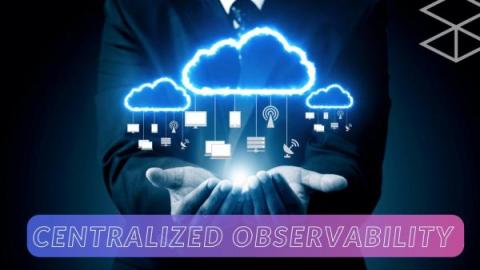
Centralized Observability may not be a buzzword but its practicality and importance can’t be denied. Let’s see why is that. As DevOps and IT teams recognize the importance of Observability, it becomes a critical component to monitor the stack and ensure data reliability. That being said, enterprises are rapidly embracing modern data stacks to harness the power of data. Therefore, a host of platforms require data observability as a tool for reliable and trustworthy data management.
In my previous articles, I discussed how to design considerations for observability solutions and how observability can augment your security implementation. In this article, I will discuss how an observability solution can provide valuable insights into your business operations through the collected data from various systems, applications, and services.
People seem to struggle with the idea that there are no repeat incidents. It is very easy and natural to see two distinct outages, with nearly identical failure modes, impacting the same components, and with no significant action items as repeat incidents. However, when we look at the responses and their variations, we can find key distinctions that shows the incidents as related, but not identical.
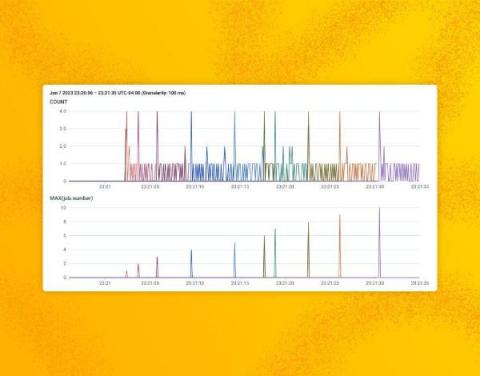
OpenTelemetry and Beelines were designed with assumptions about the types of traffic that most users would trace.
Today we’re happy to announce our new open source, scalable logging solution, VictoriaLogs, which helps users and enterprises expand their current monitoring of applications into a more strategic ‘state of all systems’ enterprise-wide observability. Many existing logging solutions on the market today offer IT professionals a limited window into live operations of databases and clusters.
AWS Fargate is a serverless pay-as-you-go engine used for Amazon Elastic Container Service (ECS) to run Docker containers without having to manage servers or clusters. The goal of Fargate is to containerize your application and specify the OS, CPU and memory, networking, and IAM policies needed for launch. Additionally, AWS Fargate can be used with Elastic Kubernetes Service (EKS) in a similar manner.
In today’s data-driven world, the need for comprehensive observability has never been greater. Organizations rely on observability to gain insights into their systems’ and applications’ performance, availability, and behavior. However, the traditional approach to observability, which involves ingesting, processing, and storing massive amounts of data, is becoming increasingly challenging and expensive.