Operations | Monitoring | ITSM | DevOps | Cloud

Tracing Gorm queries with OpenCensus & Google Cloud Tracing

At incident.io we use gorm.io as the ORM library for our Postgres database, it’s a really powerful tool and one I’m very glad for after years of working with hand-rolled SQL in Go & Postgres apps. You may have seen from our other blog posts that we’re heavily invested in tracing, specifically with Google Cloud Tracing via OpenCensus libraries.
Sponsored Post

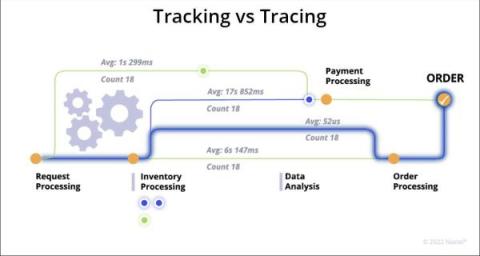
Transaction Tracking vs Transaction Tracing - What's the Difference?

Transaction tracking and tracing are not the same thing. One of the top 10 banks in the world recently chose Nastel and this was their primary reason. They had a Priority 1 request processor incident on the mainframe where high value messages went missing and it took two weeks to find them. They began by looking at another vendor who said that they did transaction tracking. As the customer said, "They will try to tell you that they do transaction tracking, and that took us a while to drill down." So, let me explain the difference between these terms using an analogy.

How to monitor Tomcat with OpenTelemetry

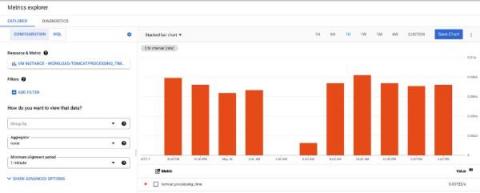
We are constantly working on contributing monitoring support for various sources, the latest in that line is support for Tomcat monitoring using the JMX Receiver in the OpenTelemetry collector. If you are as excited as we are, take a look at the details of this support in OpenTelemetry’s repo. You can utilize this receiver in conjunction with any OTel collector: including the OpenTelemetry Collector and observIQ’s distribution of the collector.

How to send logs to Grafana Loki with the OpenTelemetry Collector using Fluent Forward and Filelog receivers

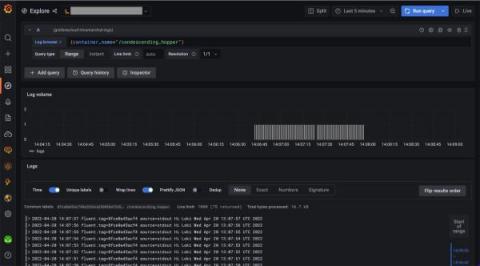
In this guide, we’ll set up an OpenTelemetry Collector that collects logs and sends them to Grafana Loki running in Grafana Cloud. We will consider two examples for sending logs to Loki via OpenTelemetry Collector. The first one shows how to collect container logs with a Fluent Forward receiver. The second one shows how to collect system logs with a Filelog receiver.

Getting Started with OpenTelemetry for Observability

This article was published in The New Stack. For most developers, software development means there is an API for almost everything, hardware is provisioned via the cloud and the core focus is on building only the features most crucial to your business. Of course, all these integrations and modern distributed architectures create their own set of problems. Having full insight into your application has become even more important and is now commonly known as observability.

Filtering Metrics with the observIQ OpenTelemetry Collector

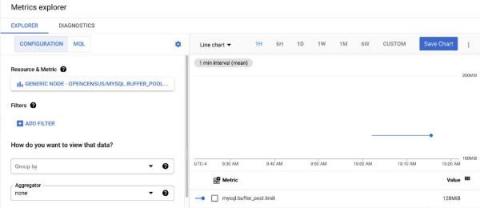
In this post, we will address the common monitoring use case of filtering metrics within the observIQ OpenTelemetry (OTEL) collector. Whether the metrics are deemed unnecessary, or they are filtered for security concerns, the process is fairly straightforward. For our sample environment, we will use MySQL on Red Hat Enterprise Linux 8. The destination exporter will be to Google Cloud Operations, but the process is exporter agnostic.

OpenTracing vs. OpenTelemetry

Monitoring and observability have increased with software applications moving from monolithic to distributed microservice architectures. While observability and application monitoring share similar definitions, they also have some differences. The purpose of both monitoring and observability is to find issues in an application. However, monitoring aims to capture already known issues and display them on a dashboard to understand their root cause and the time they occurred.

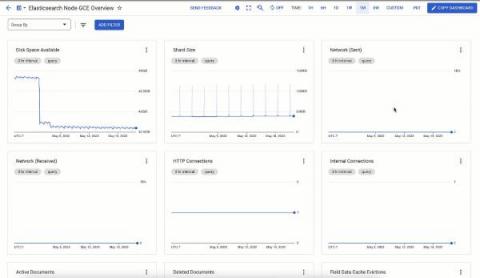
How to monitor Elasticsearch with OpenTelemetry

Some popular monitoring tools in the market can complicate and create blind spots in your Elasticsearch monitoring. That’s why we made monitoring Elasticsearch simple, straightforward and actionable. Read along as we dive into the steps to monitor Elasticsearch using observIQ’s distribution of the OpenTelemetry collector. To monitor Elasticsearch we will configure two OpenTelemetry receivers, the elasticsearch receiver and the JVM receiver.

Installing and Configuring the OpenTelemetry Collector

The scope of the OpenTelemetry project encompasses how telemetry data is collected, processed, and transmitted. The OpenTelemetry project is not involved with how the data is stored, displayed, or used beyond the collection and transmission phases. The OpenTelemetry Collector is an application written in Go.

OpenTelemetry PHP | Monitoring a PHP application with OpenTelemetry

PHP is a widely popular server-side language and enjoys the top spot in terms of market share. Many world-famous organizations like Facebook have their applications written in PHP. WordPress, which powers 43% of all websites, is also built on PHP. In this tutorial, we will use OpenTelemetry to instrument a PHP application for telemetry data. It’s essential to monitor your PHP application for performance issues and bugs.