Developers, take command of your deploys
Today we’re excited to be rolling out a completely redesigned Sleuth experience. Our new Command Center provides one place to visit so developers can quickly and safely deploy new changes.


Today we’re excited to be rolling out a completely redesigned Sleuth experience. Our new Command Center provides one place to visit so developers can quickly and safely deploy new changes.
Customer experience separates all. Agencies offering B2B services to a diverse clientele often have complex requirements such as multiple integrations, reporting specifications, pre-defined security measures, and more. Due to these constraints, selecting the right customer experience software becomes challenging for them. If you have been experiencing this hurdle, then you are in the right place.
Earlier this month, Elastic announced that there would be upcoming changes to its open source licensing. These changes do not affect on-prem deployments of Elasticsearch. Since Mattermost Enterprise Edition uses Elasticsearch in its on-prem deployments, we felt it important to explore the reasoning behind Elastic’s decision, how the new license terms are different, and why there will be no impact on Mattermost users as a result of these changes.
The Internet of Things, better known as IoT. You’ve heard of it, right? But do you know what it is? Simply, it is the interconnection of things (or endpoints) on the Internet to send and receive data. Today, experts calculate that there are 31 billion things connected to the insecure Internet, and growing exponentially. Did you know there are different types of IoT applications?
Kubernetes, also known as K8s, is a container-orchestration platform for automating deployment, scaling, and operations of applications running inside the containers across clusters of hosts. Google open-sourced the Kubernetes project in 2014. According to a recent CNCF survey, Kubernetes is the most popular container management tool among large enterprises, used by 83% of respondents. Containers are a good way to bundle and run applications.
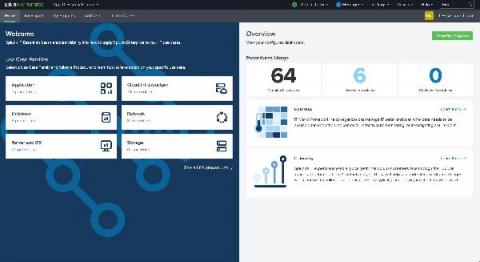
We often hear that our customers love using Splunk, know the power behind our platform and want to expand usage to IT. But they aren’t sure what steps to take first. We want our customers to maximize their Splunk investment and get them jump-started with Splunk for IT use cases by providing the guidance and best practices they seek.