Introduction to k3d: Run K3s in Docker
In this blog post, we’re going to talk about k3d, a tool that allows you to run throwaway Kubernetes clusters anywhere you have Docker installed. I’ve anticipated your questions…so let’s go!


In this blog post, we’re going to talk about k3d, a tool that allows you to run throwaway Kubernetes clusters anywhere you have Docker installed. I’ve anticipated your questions…so let’s go!
Growth engineering is a practice in which product, engineering, and design support a company’s growth efforts from within the product itself. Growth engineering has gained traction in consumer-facing companies. This practice has gained plenty of traction in the SaaS world over the last decade, to help support growth of self-serve users who often purchase services without the involvement of traditional sales teams.
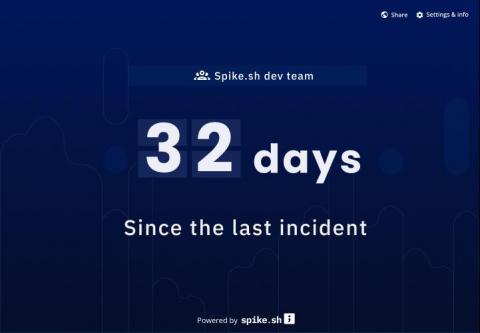
We’re excited to announce Incident Timer - a “days without an incident” timer for software teams to keep track of major engineering incidents. As the people behind Spike.sh, we keep discussing how to build a culture of reliability with our customers. We loved the idea of safety/accident timers in factories which kept track of major accidents. It's a simple and elegant way to keep safety on everybody’s minds.
For the 7.10 release of Elastic Workplace Search, we highlighted some of the new analytics logging capabilities and took you through a short walkthrough of some sample analysis scenarios. With the 7.11 release we introduced analytics fields, which open up new possibilities for exploring query and click data with helpful dashboards and visualizations.
We are excited to bring you a number of updates for using Elastic Cloud (Elasticsearch managed service) in the AWS Marketplace.
There are many hidden costs in running sub-optimal IT operations, that most organizations don’t consider. Enterprises often look at service downtime as their only KPI, but that is really only the tip of the iceberg. Without a properly operating incident management lifecycle, enterprises tend to support poorly performing services instead of fixing them.
The idea of uncovering the root cause of a problem has a universal appeal. The systems we are dealing with on a daily basis are complex. When an issue occurs, we naturally opt to resolve the deeper underlying problem rather than settle for treating the symptoms or the downstream effects.
Leaders looking to measure the benefits of AIOps and build key performance indicators (KPIs) for both IT and business audiences should focus on key factors such as uptime, incident response, remediation time and predictive maintenance, so that potential outages affecting employees and customers can be prevented. Business KPIs connected to AIOps include employee productivity, customer satisfaction and web site metrics such as conversion rate or lead generation.
If you want just to see how to find HAFNIUM Exchange Zero-Day Activity, skip down to the “detections” sections. Otherwise, read on for a quick breakdown of what happened, how to detect it, and MITRE ATT&CK mappings.