Have you ever wondered why your bounce rate is always over 70% and can never quite figure out why? Your content reads great, you’ve got top-notch videos of your products, and you’ve even got a testimonial from Microsoft saying how good your company is! Well, all of these things seem to have little impact on visitors to your website if you have a) constant pop-ups or b) slow page loading speed (and if you have both, I’d disable Google Analytics now…).
Without question, the largest disruption the customer service market has ever experienced happened at the beginning of the pandemic. Millions of customer service agents across the globe were sent home overnight, causing major disruptions for companies that were too reliant on manual processes and tribal knowledge. Agents didn’t have the necessary tools in this new remote environment, and customers experienced unprecedented wait times as a result, with some requests never being answered.
The Knowledge 2021 Digital Experience, our annual user conference, includes sessions from ServiceNow customers and partners about how they’re leveraging the Now Platform to grow their businesses and reshape their industries.
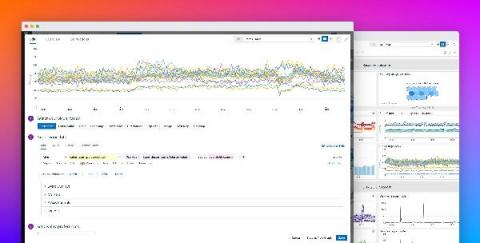
Template variables enable you to use tags to filter your Datadog dashboards to the hosts, containers, or services you need for faster troubleshooting. However, there are some cases where it may be difficult to use a standard set of template variables to aggregate all of the data you need without creating a complicated, difficult to manage set of variables. For example, you may use tag values that are a subset of another tag.
In today’s data-centric world, metrics or numbers define all performance benchmarks. The time between when an event starts and ends shows how well a system can handle and process such events. One of such metrics is MTTR. MTTR usually stands for Mean Time To Resolution, but it has held several meanings over the years. MTTR is a metric used to measure how well a system can bounce back from errors and provide long-lasting solutions.
Fargate offers a great value proposition to AWS users: forget about virtual machines and just provision containers. Amazon will take care of the underlying hosts, so you will be able to focus on writing software instead of maintaining and upgrading a fleet of Linux instances. Fargate brings many benefits to the table, including small maintenance overhead, lower attack surface, and granular pricing. However, as any cloud asset, leaving your AWS Fargate tasks unattended can lead to nasty surprises.
Auto-instrumenting Lambda Monitoring didn’t originate through a focus group or business plan. It started as a hackathon project in which our growth team used Cloudwatch to build a prototype that could instrument Lambda functions with Sentry. We did this by using Cloudformation’s stack to automatically create resources in a customer environment while streaming CloudWatch Logs to Sentry through the Kinesis Firehose.
Congratulations, you finally consider moving your apps to Kubernetes. It is a big day! Here is a checklist to ensure you did not forget anything essential to increase your chances of success using Kubernetes. We divided those points into three sections, from the most important to the least. Let’s go.