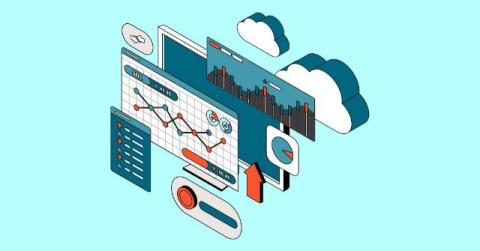
Organizations are starting to question whether the value they get from traditional Network Monitoring Systems (NMS) justifies the budget they’ve locked into them.
When I joined Kubex last year, the company was already well aware of the growing power of Large Language Models. As a company focused on intelligent resource optimization for Kubernetes, GPUs, and cloud infrastructure, generative AI didn’t feel like a threat so much as a natural extension of where the industry was heading. Kubex had already invested heavily in machine learning, but it was becoming clear that foundation models could unlock an entirely new class of capabilities for our customers.
Note: This blog post originally published in May 2025 and was updated in February 2026 to reflect that Git Sync is now available in public preview in Grafana Cloud. As your Grafana instance scales, so does the challenge of maintaining dashboards. Managing dozens—or hundreds—of dashboards through the UI alone can quickly become overwhelming. Tracking changes gets murky, dashboards multiply, and consistency suffers.
Grafana Assistant is the most general-purpose tool we’ve delivered since dashboards. People use our Grafana Cloud LLM to understand unfamiliar areas of their stacks, generate dashboards and beautiful visualizations out of thin air, build queries, and support investigations.
Despite the enterprise-wide pivot toward digital deflection, voice remains the primary escalation channel for high-complexity customer issues. Yet, while organizations rigorously optimize digital touchpoints, telephony frequently remains a siloed legacy endpoint, disconnected from the broader CRM architecture. This integration gap creates a strategic blind spot that fundamentally undermines your digital roadmap.
Setting up alert thresholds in Graphite transforms raw monitoring data into actionable notifications, helping you address system issues before they escalate. Here's what you need to know.
Creating a custom dashboard is the best way to monitor metrics that matter most to your systems. Tools like MetricFire make this process straightforward by combining hosted Grafana and Graphite, eliminating the need for self-hosted solutions. Here's how you can build dashboards tailored to your needs.
In 2026, we are seeing incredible feats of engineering with agentic AI, impacting metrics and distributed traces that map thousands of microservices. Our systems have never been more intelligent and complex. However, as our observability becomes more intelligent, fewer employees know how to manage and troubleshoot complex systems. These employees, who often bear the brunt of an error’s impact, may need to rely on specialists to interpret the system.
It’s your site’s huge, annual sale weekend, and your online store’s checkout process went down for 10 minutes. At your conversion rate, that’s $10,000 in lost sales. Thankfully, it came back up after only 10 minutes, but the real issue is that you only found out from customer complaints on social media. You spent months on email marketing and other campaigns driving traffic to this sale, and now those efforts are turning into customer frustration instead of revenue.
AI code generation is fast. Making it reliable requires runtime context. Today, Kiro gains live runtime visibility with the Lightrun MCP. This grounds AI-assisted development in how code actually behaves at runtime. Kiro, the AI coding assistant from the teams at AWS, is built for velocity and intuition. It moves from specification to production with speed and structure, helping teams turn intent into working code. But until now, like every AI coding assistant, Kiro had a major blind spot.