Operations | Monitoring | ITSM | DevOps | Cloud

The latest News and Information on Monitoring for Websites, Applications, APIs, Infrastructure, and other technologies.

DX Operational Observability: Five New, Powerful Capabilities

DX Operational Observability (DX O2), our next-gen AIOps and Observability product, continues to provide new features and enhancements for practitioners across IT. DX O2 delivers a host of enhancements designed to empower IT operations, DevOps, and SRE teams. In this post, I introduce five powerful enhancements, outline steps to get started, and describe some of the benefits, which include deeper insights, improved efficiencies, and a more unified observability experience. Here are the five enhancements.

AI + Dark Mode: Introducing AI-Powered Insights and The Long Awaited Dark Mode

Join the live stream at 11 am ET, here. Launch Week’s Friday drop delivers two of the most-requested upgrades we’ve ever shipped: Together, they turn Bindplane into a cooler , and smarter , place to manage observability and SecOps telemetry. A full suite of extensive AI features will be rolling out over the coming weeks. This is just the beginning!

Monitoring ECS Metrics: A Guide for Developers and Operations Teams

For anyone leveraging cloud computing, Amazon Elastic Container Service (ECS) continues to provide a seamless solution for managing containerized applications. AWS Fargate takes this cloud-native architecture a step further by allowing you to run containers without servers or clusters. As a serverless offering for ECS, Fargate provisions compute capacity and scales it based on demand.

Fluentd vs Logstash: In-Depth Comparison of Two Popular Log Collectors 2025

In modern observability stacks, log collection is a critical component. Among the most widely adopted logs collector are Fluentd and Logstash. Both tools are designed to collect, process, and forward logs to various destinations like Elasticsearch, Kafka, and cloud services. However, the differences between FluentD and Logstash lie significantly in their design, performance, plugin ecosystems, and user experiences.

3 Reasons Why You Should Use Custom Playwright Fixtures

In this video, Stefan Judis, Playwright ambassador, explains the power of Playwright fixtures while running tests in JavaScript or TypeScript. Learn how to streamline your test setup, remove repeated code, and leverage custom fixtures for cleaner and more efficient end-to-end tests. By the end of this video, you'll have a clear understanding of why you should use Playwright's native architecture to structure your testing project.

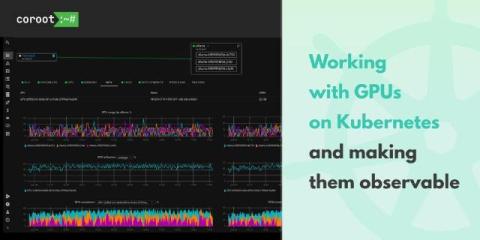
Working with GPUs on Kubernetes and making them observable

GPUs are everywhere powering LLM inference, model training, video processing, and more. Kubernetes is often where these workloads run. But using GPUs in Kubernetes isn’t as simple as using CPUs. You need the right setup. You need efficient scheduling. And most importantly you need visibility. This post walks through how to run GPU workloads on Kubernetes, how to virtualize them efficiently, and how Coroot helps you monitor everything with zero instrumentation or config.