The latest News and Information on Monitoring for Websites, Applications, APIs, Infrastructure, and other technologies.
From a customer’s standpoint, it is always agonizing to wait for the resolution of a complaint about the product or service we have bought from a company. None of us would want to hear, “We have escalated your concern to our seniors; your patience is highly appreciated.” Let us switch to the other side of the table. Most organizations rely on a tiered approach to resolve an issue from a support perspective.
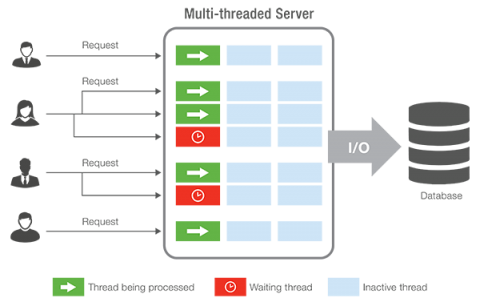
A thread, in the context of Java, is the path followed when executing a program. All Java programs have at least one thread, known as the main thread, which is created by the Java Virtual Machine (JVM) at the program’s start, when the main() method is invoked with the main thread. In Java, creating a thread is accomplished by implementing an interface and extending a class. Every Java thread is created and controlled by the java.lang.Thread class.
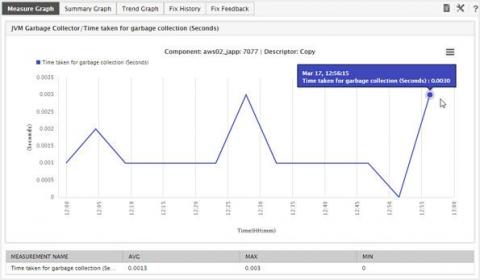
For many, the world of Java is shrouded in mystery and endeavor. One such endeavor is garbage collection. There is many a viewpoint on garbage collection – whether it is good or bad, when is it needed, how often should it run, how to tune garbage collection operation, how to know when it is not operating as expected, and so on. In this educational post, we will try to clear the air on Java garbage collection and make it easy for developers and administrators to deal with it.
IBM Cloud Pak for Integration (CP4I) is a platform that helps you quickly and easily integrate your hybrid cloud applications with the systems and applications that are important for running your business. It can help to collaborate between the different application teams and businesses that exist in your organization and ensure that they are working together at maximum efficiency.
With digital service expansion putting pressure on IT, 'Gartner Predicts 2022: Build Digital Platforms for Adaptive Resilience’ is a helpful guide for I&O leaders with their sights on 2025. If you looked up “tech trends” right now, how many search results would you expect to see? 100 million? 500 million? Think again. Between blog posts, research reports, and news articles, you’d actually find roughly 1.5 billion search results.
There are multiple reasons why Java and the Java Virtual Machine-based languages are very popular among developers. A rich ecosystem with lots of open-source frameworks that can be easily incorporated and used is only one of them. The second, in my opinion, is the automatic memory management with a powerful garbage collector. The Java garbage collector, or in short, the GC, takes care of cleaning up the unused bits and pieces.
Have you found yourself asking this question when seeing website monitoring solutions flash up on Google? Has your dev team been trying to convince you to get a monitoring tool but you’re not sure what the benefits are? Don’t worry, I’ve compiled a list of the top reasons why website monitoring is so important to you and your website. But you don’t have to take my word for it, read on and find out.
This is one of a series of blogs in which we introduce AppScope 1.0 with stories that demonstrate how AppScope changes the game for SREs and developers, as well as Infosec, DevSecOps, and ITOps practitioners. In the coming weeks, Part 2 of this post will tackle another Infosec use case. If you’re in Infosec, at some point you’ve doubtless had to vet an application before it’s allowed to run in an enterprise environment.