The latest News and Information on Monitoring for Websites, Applications, APIs, Infrastructure, and other technologies.
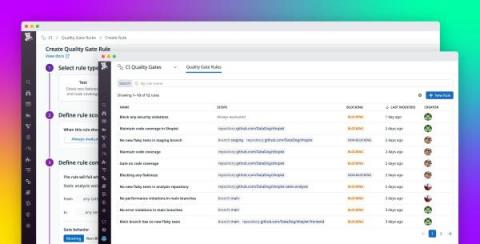
Maintaining the quality of your code becomes increasingly difficult as your organization grows. Engineering teams need to release code quickly while still finding a way to enforce best practices, catch security vulnerabilities, and prevent flaky tests. To address this challenge, Datadog is pleased to introduce Quality Gates, a feature that automatically halts code merges when they fail to satisfy your configured quality checks.
Integrating AI, including large language models (LLMs), into your applications enables you to build powerful tools for data analysis, intelligent search, and text and image generation. There are a number of tools you can use to leverage AI and scale it according to your business needs, with specialized technologies such as vector databases, development platforms, and discrete GPUs being necessary to run many models. As a result, optimizing your system for AI often leads to upgrading your entire stack.
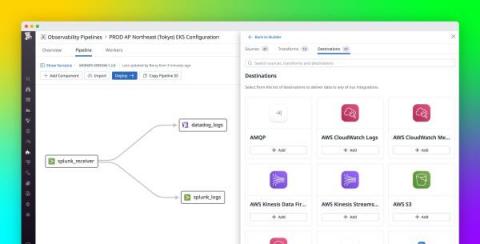
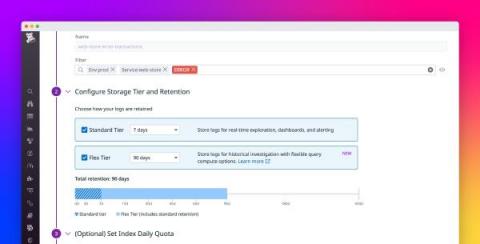
As your infrastructure and applications scale, so does the volume of your observability data. Managing a growing suite of tooling while balancing the need to mitigate costs, avoid vendor lock-in, and maintain data quality across an organization is becoming increasingly complex. With a variety of installed agents, log forwarders, and storage tools, the mechanisms you use to collect, transform, and route data should be able to evolve and adjust to your growth and meet the unique needs of your team.
Amazon Elastic Container Service (ECS) is a versatile platform that enables developers to build scalable and resilient applications using containers. However, containerized services, like Node.js applications, may face challenges like memory leaks, which can result in container crashes. In this blog post, we’ll delve into the process of identifying and addressing memory leaks in Node.js containers running on ECS. First, let’s look closer at what a memory leak is.
The Knowledge Base has had an upgrade, introducing our new Support Center! The Support Center is packed with tonnes of useful information to help you make the most of the RapidSpike platform.
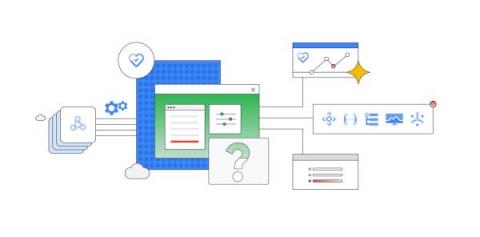
Personalized Service Health sends custom granular alerts about Google Cloud service disruptions, and integrates with incident management tooling.
Out of more than 100 services that Amazon Web Services (AWS) provides, Amazon CloudWatch was one of the earliest services provided by AWS. CloudWatch was announced on May 17th, 2009, and it was the 7th service released after S3, SQS, SimpleDB, EBS, EC2, and EMR. AWS CloudWatch is a suite of tools that encompasses a wide range of cloud resources, including collecting logs and metrics; monitoring; visualization and alerting; and automated action in response to operational health changes.