FastAPI is known for building REST APIs, middleware services, and simple integration for adding authentications and more. And it’s known for doing all of that…you guessed it, fast. It’s used by tech giants and scientists alike, and according to Stack Overflow’s Developer Survey 2022 more developers are using FastAPI than Ruby on Rails.
Developers commonly integrate the code and these frequent modifications in a central repository as part of the software development method is known as continuous integration (CI). Improved software quality, faster quality audit and bug fixes, and quick validation and release cycles are all major goals of continuous integration. Continuous Delivery (CD), which builds on top of Continuous Integration(CI), includes automating both builds and the complete software release process.
Check August 2022 health report on the top 10 most popular cloud providers. We analyze the health of the cloud providers based on the number of outages and problems during the month. Please analyze the information with a grain of salt as each provider has their own framework for reporting incidents, and in no way one provider having more outages, means that they are worse than other. Also we are comparing providers with very different sizes and market share.
You wouldn’t let just anyone enter your home, and your network should be no different. Here’s how Firewall as a Service (FWaaS) acts as your cloud infrastructure’s own security guard for better data protection.
Colleges and universities face immense IT challenges. The end user base is regularly overturning with students coming and going. And residential students are just part of the problem. Increasingly, schools support extensive distance learning, which only gained ground thanks to COVID. Now that remote work and distance learning are the new mandates, there are even more difficult challenges for Higher Education IT to deal with.
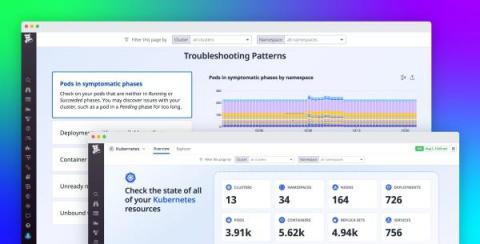
Many organizations use Kubernetes to orchestrate their containerized applications. But because Kubernetes is complex, application developers may take some time to ramp up on the intricacies of monitoring a Kubernetes environment. This means that teams often need to create internal documentation and offer hands-on training to bridge the knowledge gap.
Application teams must understand what their customer experience is like. This is true not only from a general perspective (in terms of usability and responsiveness) but also on a day-to-day, minute-by-minute basis. In particular, when you work with distributed systems, errors are inevitable. Site traffic fluctuates throughout the day, and any one of a system’s dependencies could also encounter an issue at any time.
The pandemic accelerated digital transformation in the business world by forcing companies to double down on areas in which they’d already begun investing. The mass move to video conferencing solutions in industries such as healthcare and education are two examples. In other industries, companies were only able to survive by jumping into completely new areas: brick-and-mortar retailers diving feet-first into e-commerce after lockdowns and health concerns kept shoppers indoors, for example.
Machine learning has infiltrated the world of security tooling over the last five years. That’s part of a broader shift in the overall software market, where seemingly every product is claiming to have some level of machine learning. You almost have to if you want your product to be considered a modern software solution. This is particularly true in the security industry, where snake oil salesmen are very pervasive and vendors typically aren’t asked to vigorously defend their claims.