Operations | Monitoring | ITSM | DevOps | Cloud

The latest News and Information on DevOps, CI/CD, Automation and related technologies.

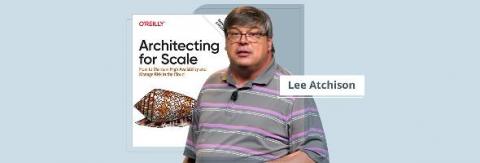
Interview: Why Applications Fail and What to Do About It

Lee Atchison is a recognized industry thought leader in cloud computing and has significant experience architecting and building high scale, cloud-based, service oriented, SaaS applications. Formerly the Senior Director for Cloud Architecture at New Relic, Lee is now the owner of Atchison Technology LLC, a cloud consulting and advising firm. Lee is also the author of “Architecting for Scale,” a book published by O’Reilly Media.

Putting the stack in JAMstack

Stackery is focused on helping developers leverage the power of AWS managed services. Our secure delivery platform is used to ship Lambda functions, HTTP Gateways, Aurora database clusters, and many more services which you can view usage of in Anna’s blog on the topic. Recently, I noticed an emerging workload running on our platform: the JAMstack. That’s a term for web applications composed primarily of JavaScript, APIs, and Markup.

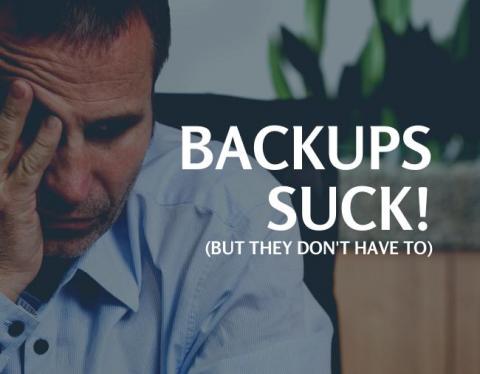
Backups Suck (But They Don't Have to)

Focus on what matters with instant visibility into the condition of your backup application and detailed analytics to quickly pinpoint where any issues lie. IBM’s backup monster, Spectrum Protect (TSM as we called back in the day), sucks. Not because the software sucks – it’s actually the best there is – but because backups suck in general. It’s the quintessential necessary evil of IT.

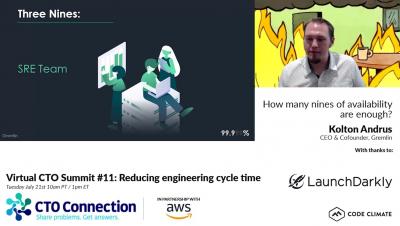
How many 9's are enough? Kolton Andrus  CTO Connection: Reducing engineering cycle time

How many nines of availability are enough? In this talk, Gremlin CEO Kolton Andrus shares insights from years at Amazon, Netflix, and now working with a wide array of customers across various disciplines and industries. He’ll describe what each level of availability looks like, the challenges faced at each stage, and the trade-offs required to achieve the next nine of uptime.

KMC - How Helm 3 and Helm Charts Create Reproducible Security

Helm 3 is developing a set of best practices that help make Kubernetes applications more secure. As a recent graduate from incubation to full-fledged project of the Cloud Native Computing Foundation, Helm has been developing its own ecosystem and is working towards mature tooling. Join Rancher and JFrog as they provide more details into updates in Helm 3 and how Helm Charts create reproducible security in the Kubernetes ecosystem.

Incorporate Datadog Synthetic tests into your CI/CD pipeline

Testing within the CI/CD pipeline, also known as shift-left testing, is a devops best practice that enables agile teams to continually assess the viability of new features at every stage of the development process. Running tests early and often makes it easier to catch issues before they impact your users, reduce technical debt, and foster efficient, cross-team collaboration.

Expand your monitoring reach with the Datadog Marketplace

The Datadog Partner Network (DPN) is a rapidly growing registry of hundreds of leaders in the cloud service industry who choose Datadog to meet their infrastructure-monitoring needs. Partners are well-acquainted with the more than 400 technology integrations available to Datadog customers, but with the huge diversity in technical stacks used by our customers, there’s always demand for more customization and flexibility.

Dash 2020: Guide to Datadog's newest announcements

Today, at Dash 2020, we unveiled new products and features on the Datadog platform that provide engineering teams with even deeper visibility into their distributed applications and infrastructure. With these additions, Datadog further streamlines every step of your release cycle, from shift-left testing in your CI/CD pipelines to profiling your code in production.