The latest News and Information on DevOps, CI/CD, Automation and related technologies.
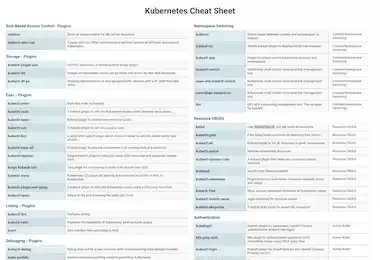
In the world of container orchestration, Kubernetes has become the de facto standard. Despite its simplicity in some respects, it has also introduced new levels of complexity in the deployment and management of distributed applications and services. To assist you with understanding the most common kubectl commands & plugins, we've created a cheat sheet as a reference for operations engineers, software engineers, and cloud infrastructure managers who use Kubernetes primarily.
Have you ever wished that software development could be faster and focused on quality? Then DevOps may be the answer for your organization. DevOps is a set of practices that combine software development and IT operations to facilitate collaboration between teams. The industry is constantly evolving, and new tools are being introduced daily. With so many options, it can take time to determine which ones are worth your time and money.
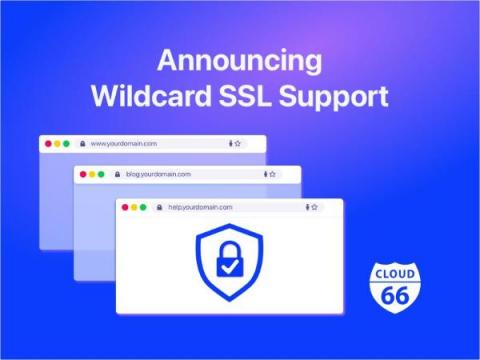
Hey everyone, We've got some exciting news to share - wildcard SSL certificates are now available on Cloud 66! If you're not familiar with wildcard SSL certificates, they allow you to secure multiple subdomains under a single certificate. Our options for adding an SSL certificate to your application are now updated to include the following: To set up a Wildcard certificate on Cloud 66, just open your app on your Dashboard and click Network, then SSL Certificate, and then "Add SSL".
In this tutorial, we will walk through the setup of a single-node K3s Kubernetes cluster with Rancher, together with the S3 Gateway (s3gw) and a Longhorn PV (Persistent Volume). This guide will use Digital Ocean, but these instructions will likely work with other cloud providers as well.
Bringing the power of quantum encryption to the cloud, we take a look at the emerging technology that’s changing how we protect our data.
The automotive industry is facing one of its biggest revolutions since the advent of automation. In this post, we will go through the Industry 4.0 aspects and how OEMs can turn these challenges into opportunities. To put it simply, the first Industrial Revolution relied on steam power, the second one on electricity and the third one on computers. What about the fourth Industrial Revolution everyone is talking about? I would describe it as a data-driven revolution.