The latest News and Information on DevOps, CI/CD, Automation and related technologies.
Kubernetes is essential to modern application development and runtime. As a powerful container orchestration platform, its benefits include improved scalability, portability, and automation, all of which contribute to more resilient applications and cost savings. More and more organizations are adopting Kubernetes to develop applications that can scale, recover from failures, and quickly adapt to changing business requirements.
OpenStack is no doubt a wonderful and successful piece of software. It allows you to create your own cloud infrastructure, and thanks to its open-source nature, it’s free to use for everyone. But as with many giant software projects, all that power comes with a challenge: it is reasonably complex to install and configure.
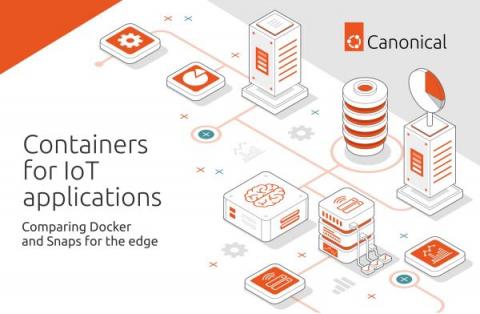
The Docker project was initiated by dotCloud, a platform-as-a-service (PaaS) company that created Docker to run their internal infrastructure. Slowly, Docker became more successful than any of their other products, so dotCloud rebranded as Docker Inc. Docker provides easy-to-use tooling and grew into an entire ecosystem for container management.
To learn more about CircleCI or sign up for a free account, visit: https://circleci.com/signup/
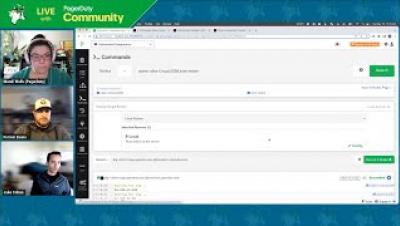
DevOps teams and site reliability engineers (SREs) contend with a never-ending flood of notifications and alerts about outages, potential threats, and other incidents. Companies rely on their DevOps teams to not only keep abreast of all the notifications but also to identify and prioritize the critical alerts and resolve problems in a timely manner. Yet in 2021, International Data Corporation (IDC) reported that companies with 500-1,499 employees ignored or failed to investigate 27% of all alerts.
Preparing for a software audit can be a time-consuming and painful process where a lot of information needs to be gathered and verified in a provable audit trail. It means tracking down and piecing together evidence for pull requests, test reports, security scans, deployment logs, and more. This information is usually scattered across tools which are typically unsecured and unmanaged, so it can be easily deleted and/or modified.