Operations | Monitoring | ITSM | DevOps | Cloud

Why haven't UK organizations moved off the hyperscalers?

Two-thirds of UK IT leaders say they would switch cloud providers to take back control. Fifteen percent have actually done it. That is the headline from Civo's Digital Sovereignty Revolution 2026, a survey of 1,000 UK IT leaders. The intent is loud and getting louder. The movement is almost silent. It would be easy to call that apathy. It is not. UK organizations are staying on hyperscale infrastructure they no longer fully trust for four very specific reasons. Three of them are structural.


From Laptop to Production: A Technical Teardown of the Komodor Agentic Operations Platform

An agent that works on your laptop is borrowing three things it doesn’t own: your identity, your attention, and your judgment. It runs with your credentials and your access. It runs when you trigger it. And when it gets something wrong, you notice and tell it, which is the only evaluation it ever gets. Deploy the same skill to the cloud, unattended and pointed at production, and all three disappear at once.

Purchase Order Tracking For IT Hardware: From PO to Asset Record

Purchase order tracking is the practice of following each purchase order (PO) from the moment it's issued until the goods are delivered, invoiced and the order is closed. Procurement, finance and IT teams use it to know what was ordered, what arrived and what is still pending. In IT, the trail runs one step further: every laptop, monitor or server on the order ends up as a device with a serial number that someone has to register in the inventory.

Grafana 13.3 release: manage variables across dashboards, share findings with Notebooks, a UI refresh, and more

Grafana 13.3 is here, bringing more consistency and control to how you work across Grafana. Cross-dashboard variables help you manage shared dashboard controls from one place, while Notebooks let you capture and share findings from across Grafana in a single, editable document. You'll also get a first look at Grafana's biggest visual refresh since Grafana 7, along with new ways to guide and refine dashboards built with Grafana Assistant.

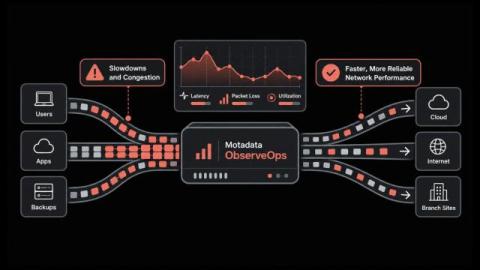
Network Optimization Guide With 10 Top Ways to Cut Slowdowns and Downtime

Why does everything crawl at peak hour, even though every switch looks fine? Calls break up and file copies stall. Then the tickets arrive, each one some version of "the network is slow." It's rarely one broken device. A WAN link maxes out for an hour with voice packets queued behind a backup job. Last week's config change hasn't been linked to any of it yet. Network optimization sorts this out one measured step at a time, starting with performance monitoring.

Default to serverless for AI agents, then let production data decide what moves

Serverless should be the first execution model teams evaluate for AI agent workloads. Many agents spend much of their lifetime waiting, and always-on compute forces teams to pay for every idle minute. In a study of more than 35,000 production coding-agent sessions, the median session ran LLM or tool calls for only 20% of its lifetime. The rest of the time, it sat idle between steps, with its sandbox still allocated.

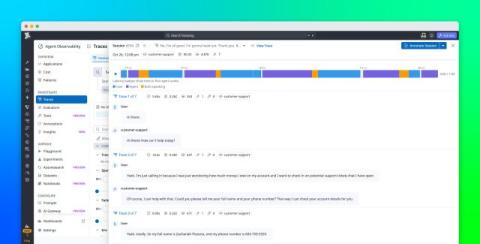
Trace voice agents with Datadog Agent Observability

A voice agent can return the right words and still deliver a poor experience. It might leave a caller in silence, speak over them, or stop midway through a response. A transcript may look correct even when the audio the user heard was delayed, incomplete, or different from the text on screen. These problems are difficult to diagnose from text traces alone. Voice conversations also involve more than a single request and response.

Datadog named a Leader in the Forrester Wave: AIOps Platforms, Q4 2026

Datadog has been named a Leader in The Forrester Wave: AIOps Platforms, Q4 2026. We believe this placement reflects Datadog’s commitment to transforming observability into autonomous operations with a single integrated platform where AI agents detect, investigate, and remediate production issues, while engineers stay in control. Close dialog.

Detect when your AI agent copies a self-replicating prompt injection

In September 2026, OpenAI reported finding self-replicating prompt injections. These attacks hide instructions in content an AI agent retrieves, directing it to take unauthorized actions and copy those instructions into emails, files, or messages. Copied instructions can then expose other agents or later sessions to the same attack, giving it the potential to spread like a computer worm.