Operations | Monitoring | ITSM | DevOps | Cloud

The latest News and Information on Monitoring for Websites, Applications, APIs, Infrastructure, and other technologies.

The Advent of Monitoring, Day 8: How to Monitor All the Nines of Your Service-Level Agreements

If you have large(r) customers, there is a point where they ask you for service-level agreements, or short SLAs. These are customer contracts defining different aspects of your service and what you guarantee for them. One common agreement is around availability, or, colloquially speaking, uptime. Your contract might state, and I am not a lawyer, that you guarantee that your service (or core parts of it) is available 99.99% of the time of a given period, mostly per month, quarter, or year.

A Head Nerds Guide to Building Custom Monitoring

I have spoken with many prospects and partners over the years and one of the more frequent questions I am asked is: “How do you build Custom Monitoring”. This is not an easy question to answer as there are so many variables at play, including: what type of device are you trying to monitor, what metrics are you looking for, what thresholds should trigger a warning or failure, etc.

Azure VM Rightsizing for Performance Excellence and Cost Control

Azure Virtual machines are one of the computing services offered by Azure. Azure VMs provide flexibility and agility, enabling organizations to swiftly deploy and scale applications without investing in and maintaining on-premises hardware. Azure VMs are fundamental in creating and managing the Azure cloud infrastructure. The concept of Azure VM rightsizing involves choosing the most suitable VM size for your workloads based on the resource requirements.

The Power of AI in Network Monitoring

As per a survey by Comcast Business, around 85% of IT leaders trust AI networking tools for meeting their organization’s goals. This stat alone is enough to show how big of a role AI is playing in network monitoring. And it’s just the beginning, with rapid development in Artificial Intelligence, we might see a lot more sophisticated AI use cases for network monitoring. But how exactly does AI help in network monitoring? What its roles, benefits, challenges, and how to implement it?

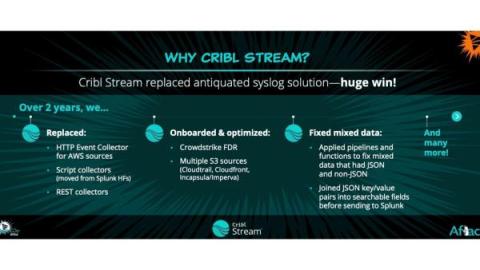
Enrichment: Better Data in for Better Response Times Out

In this conversation, Cribl’s Carley Rosato talks to Aflac’s Shawn Cannon about his role as a Threat Management Consultant, and how he manages their SIEM environment, brings in new data as needed, and works to improve the ingestion process. Our customers are always coming up with new and exciting ways to implement Cribl tools — importing a 34 million-row CSV file into Redis and enriching events in Splunk might be one of the most impressive we’ve seen so far.

OpenTelemetry Overview

Monitoring distributed systems means collecting data from various sources, including servers, containers, and applications. In large organizations, this data distribution makes it harder to get a single view of the performance of their entire system. OpenTelemetry helps you streamline your full-stack observability efforts by giving you a single, universal format for collecting and sending telemetry data. Thus, OpenTelemetry makes improving performance and troubleshooting issues easier for teams.

Understanding the difference between OpenSearch and Elasticsearch

Search is a fundamental requirement for anyone working with log files. When you have terabytes and petabytes of data, you need to find answers to questions – fast. The search engine that you choose sits as the cornerstone for any technology that helps you look for the information needed to answer questions. While OpenSearch and Elasticsearch may have similar beginnings, their modern iterations have significant differences.