Operations | Monitoring | ITSM | DevOps | Cloud

The latest News and Information on Cloud monitoring, security and related technologies.

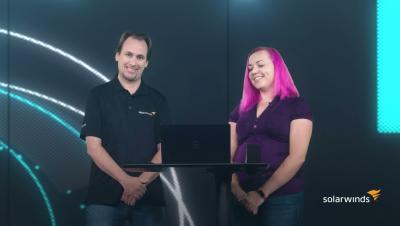
How Customers Drive Our Continuous Innovation

With more than 300,000 customers, a thriving community of 185,000 THWACK® users, frequent SWUG™ events, and some 650,000 developers certified on SolarWinds® products, we have a unique ability to keep our fingers on the pulse of what our clients need to better manage, monitor, and understand their complex environments. We’re reminded every day how these customer interactions collectively serve as a crucial competitive advantage.

RESOLVE '22: How to get multi-cloud done right

Multi-cloud is inevitable. With AIOps, struggling in its complexity doesn’t need to be. Business technology stacks don’t appear out of a vacuum. For the modern cloud-enabled, cloud-dependent company (that is to say, most of them), the look from the inside looks more like an ongoing evolution than a monolithic choice.

Why Your Legacy Cloud Cost Tools Aren't Cutting It

In the beginning of cloud computing, before the earliest cost tools came along to give companies a glimpse into their spending, most businesses found it hard to determine where their cloud budget was going. The money disappeared into the black hole of the cloud service provider, and in exchange, the business received cloud services. Achieving any sort of granularity beyond that was next to impossible.

Quick Bytes - Lumigo Alerts

Lumigo Alerts allows you to create customized alerts for anything lumigo monitors, including event-based alert (e.g., timeout) and key metrics (e.g., error rate). The alerts can delivered via email or a multiple of platform integration options like slack, Microsoft teams and more. Make sure to subscribe so you don't miss out on any new livestreams and observability content! With one-click distributed tracing, Lumigo lets developers effortlessly find and fix issues in serverless and containerized environments

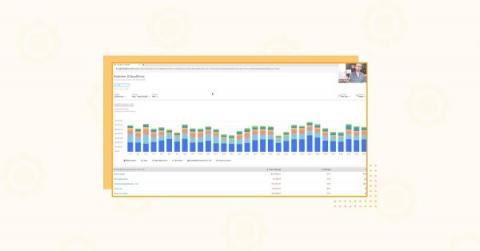
Cloudability Pricing: How Much Does Cloudability Cost?

Apptio announced on May 31, 2019, that it had acquired Cloudability, hoping to strengthen its mission through its new product. Cloudability is a multi-cloud financial management platform for enterprises looking for a more unified way to view, understand, and act on cloud cost insight. Cloudability lets enterprises analyze cloud costs across Amazon Web Services (AWS), Microsoft Azure, and Google Cloud Platform (GCP). Apptio Cloudability provides FinOps capabilities as Software-as-a-Service (SaaS).

What is AWS Kinesis?

Amazon Web Services (AWS) Kinesis is a cloud-based service that can fully manage large distributed data streams in real-time. This serverless data service captures, processes, and stores large amounts of data. It is a functional and secure global cloud platform with millions of customers from nearly every industry. Companies from Comcast to the Hearst Corporation are using AWS Kinesis.

Using BAM from Azure Synapse Pipelines

Many organizations are investing heavily in the data space, and Azure Synapse is one of the technologies in the Microsoft stack which is very popular. Within Synapse, Data Flows are the component of Synapse used to orchestrate the movement of data into and out of your Data Lake and for orchestrating jobs within your Data Platform. The business heavily depends on your data platform for movements of data within the organization and the analytics-driven from data via Synapse.

Cloud certifications for the security of your data

More and more companies around the world are using cloud solutions to run their applications, software or to store their data. But what about cloud compliance? The democratisation of the cloud is not surprising as it provides access to virtual data storage where companies no longer need to buy or maintain their own IT infrastructure. However, with cloud solutions, the security of user data should not be overlooked. There are cloud certifications and regulations that can help you in your choice.

New! Common Automated Diagnostics for AWS Users

Today’s modern cloud architectures centered on AWS are typically a composite of ~250 AWS services and workflows implemented by over 25,000 SaaS services, house-developed services, and legacy systems. When incidents fire off in these environments—whether or not a company has built out a centralized cloud platform—distinct expertise is often a necessity.