The latest News and Information on DevOps, CI/CD, Automation and related technologies.
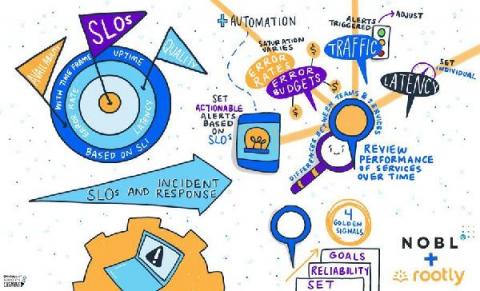
Service Level Objectives (SLOs) are a key component of any successful Site Reliability Engineering initiative. The question is, what are SLOs; and how do you determine what your SLOs should be? Once you've done that, how should you use them?
In software development, processing and storing data in different states reflects the business rules an application is built on. The heart and soul of any software application is the data that is persisted in databases for retrieval and further processing. The database system (SQL or Non-SQL) chosen for an application must serve the required data processing and storage needs of the application.
HAProxy 2.4 adds exciting features such as support for HTTP/2 WebSockets, authorization and routing of MQTT and FIX (Financial Information Exchange) protocol messages, DNS resolution over TCP, server timeouts that you can change on the fly, dynamic SSL certificate storage for client certificates sent to backend servers, and an improved cache; it adds a built-in OpenTracing integration, new Prometheus metrics, and circuit breaking improvements.
The question I am regularly asked is, “What use is OTN, when services are all IP, and routers handle connectivity directly across optical fiber connections, or wavelengths on optical fiber (IPoWDM)?”
Artificial intelligence is transforming software development. From the code to the deployment, AI is slowly but surely upping its game and helping us discover a brand new paradigm for inventing technology. Algorithm-based machine learning is being used to accelerate the software development lifecycle and AI is supporting developers to optimize software workflow at every stage of the development process.
A dark launch is a deployment strategy for testing new versions of a service in production. When running a dark launch, you deploy a new version of a service and route a copy of production traffic to it without returning responses to users. This lets you see how a new version of a service handles production load, watch for errors, and compare performance between the old and the new versions—without affecting users.
This blog is the first in a four-part series on infrastructure automation for government agencies that are modernizing digital systems while grappling with budget and staffing constraints and the challenges of COVID-19. The last 12 months have been a turning point for many government agencies. The COVID-19 pandemic has accelerated the drive towards modernization and, with it, the need to ensure security and compliance requirements across a host of legacy systems and processes.