Operations | Monitoring | ITSM | DevOps | Cloud

The latest News and Information on Databases and related technologies.

NiCE Oracle Management Pack 5.2 for Microsoft SCOM

TThe Management Pack provides clear and precise performance indicators and timely alerts enriched by pinpointing problem identification and troubleshooting information. It streamlines the workflow and helps for better planning based on detailed reports. The integration into System Center enables a single pane of glass view into your Oracle environment, secured by Microsoft technologies.

Choose the right time series database | Aiven Info Bytes

You have a load of time-stamped data coming in and you realize you need a time series database. But which one should you choose? Watch the video to find out! ABOUT AIVEN We help organizations fuel the continuous innovation needed to create awesome, data-intensive applications by using the leading open source technologies. After building expertise managing mission-critical data infrastructure for companies like F-Secure and Nokia, Aiven’s founders noticed that cloud adoption was increasing but infrastructure solutions were either proprietary or difficult to translate into business results.

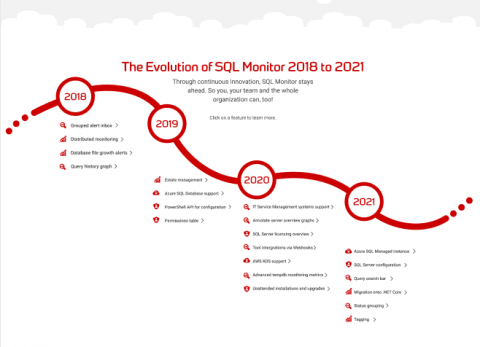
Visibility Into Distributed Availability Groups With SQL Sentry

I began my career as an associate software development engineer in June of 2020, and during my short time in the industry, I’ve had the opportunity to build and troubleshoot continuous integration and continuous development (CI/CD) pipelines, work on many different technologies within several SolarWinds®, formerly SentryOne, products, and learn proper engineering practices.

Why Observability Requires a Distributed Column Store

Honeycomb is known for its incredibly fast performance: you can sift through billions of rows, comparing high-cardinality data across thousands of fields, and get fast answers to your queries. And none of that is possible without our purpose-built distributed column store. This post is an introduction to what a distributed column store is, how it functions, and why a distributed column store is a fundamental requirement for achieving observability.

How to Troubleshoot Apache Cassandra Performance Using Metrics and Logs in Debugging

In the era of data abundance, there exists a significant need for database systems that can effectively manage large quantities of data. For certain types of applications, an oft-considered option is Apache Cassandra. Like any other piece of software, however, Cassandra has issues that could potentially impact performance. When this happens, it’s critical to know where to look and what to look for in the effort to quickly restore service to an acceptable level.

Exploring Your Data Universe

You can learn a lot about an organization by looking at their data. For example, if I see “LoanToValue” (LTV) or “CollateralValue,” I could surmise they deal with financial data—specifically loans—in some fashion. Developers and database administrators with domain knowledge about the intrinsic meaning of the data are precious friends. These individuals understand the meaning behind the data and how it works within the applications of the organization.

Compliance in your Database DevOps pipeline - continuous classification with SQL Data Catalog

Keeping classifications up to date across a constantly evolving structured data landscape is a difficult task, however it can become part of your DevOps process instead of simply offering further red tape to your development teams. Join Chris Unwin, a solution engineer at Redgate Software, to see how you can include SQL Data Catalog within your upstream DevOps process so that nothing in your Production environments is ever without classification.

Generating DDL Statements to Recreate Single Objects

Every database administrator (DBA) is—first and foremost—human. And everyone makes mistakes. It’s not the absence of mistakes but rather how you prepare for those mistakes that makes you a great DBA. Luckily, there are many ways to prepare for those mishaps, whether the errors are made by you or someone else on your team. One commonly made mistake is to drop an object in a database or accidentally delete data.