Operations | Monitoring | ITSM | DevOps | Cloud

The latest News and Information on Cloud monitoring, security and related technologies.

All together now: Bringing your GKE logs to the Cloud Console

Troubleshooting an application running on Google Kubernetes Engine (GKE) often means poking around various tools to find the key bit of information in your logs that leads to the root cause. With Cloud Operations, our integrated management suite, we’re working hard to provide the information that you need right where and when you need it. Today, we’re bringing GKE logs closer to where you are—in the Cloud Console—with a new logs tab in your GKE resource details pages.

11 Tips for Avoiding Cloud Vendor Lock-In

11 Tips for Avoiding Cloud Vendor Lock-In Cloud vendor lock-in. In cloud computing, software or computing infrastructure is commonly outsourced to cloud vendors. When the cost and effort of switching to a new vendor is too high, you can become “locked in” to a single cloud vendor. Once a vendor’s software is incorporated into your business, it’s easy to become dependent upon that software and the knowledge needed to operate it.

Key metrics for monitoring AWS Fargate

AWS Fargate provides a way to use AWS container orchestration services—Amazon Elastic Container Service (ECS) and Amazon Elastic Kubernetes Service (EKS)—without needing to provision and maintain the infrastructure that runs your containers. Fargate is similar to serverless container platforms from Google (Cloud Run) and Microsoft (AKS virtual nodes).

How to collect metrics and logs from AWS Fargate workloads

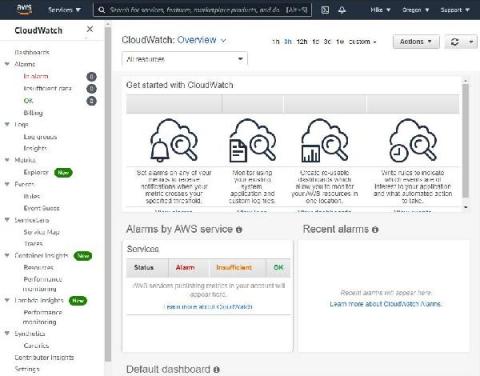
In Part 1 of this series, we showed you the key metrics you can monitor to understand the health of your Amazon ECS and Amazon EKS clusters running on AWS Fargate. In this post, we’ll show you how you can: You can use Amazon CloudWatch and related AWS services to gain visibility into your ECS clusters and the Fargate infrastructure that runs them.

AWS Fargate monitoring with Datadog

In Part 1 of this series, we looked at the important metrics to monitor when you’re running ECS or EKS on AWS Fargate. In Part 2 we showed you how to use Amazon CloudWatch and other tools to collect those metrics plus logs from your application containers. Fargate’s serverless container platform helps users deploy and manage ECS and EKS applications, but the dynamic nature of containers makes them challenging to monitor.

How to see all your Azure VM Snapshots

Snapshots in Azure is a nice feature that allows you to take a read-only, “point in time” snapshot of a Virtual Machine’s disk. You can take a snapshot of a VM’s OS or data disk. You can use this snapshot to revert the VM to a point in time before an event occurred, or you installed something that didn’t go quite right.

Why to Use Git Instead of "TFS" (TFVC)

One question we frequently hear from customers using the Microsoft stack is, “should I use Git or TFS?” The question requires a little decoding due to the way that Microsoft has shifted their brands over time. Here’s some background. Many people still refer to this as “TFS,” regardless of the version they are using. TFVC used to be the default type of repo for TFS projects.

Azure Management Talk: Application Observability in a Distributed world

In this session, Chris Reddington will provide an overview of Application Insights and how it slots into the wider Azure Monitoring ecosystem. We will explore Alerts, Metrics, Queries, Dashboards, Workbooks and more, and how Application Insights can bring clarity to a distributed cloud deployment.

Understanding the consumer side of Azure Event Hubs (Checkpoint, InitialOffsetProvider, EventProcessorHost)

Azure Event Hubs are cloud-scale telemetry ingestion from websites, apps, and devices. Because of the tremendous event handling capacities, IoT architectures also consume the Azure Event Hubs. Thus, we talk about handling millions of events per second. With the implementation of multiple partition architecture behind the scenes, Azure Event Hubs are highly scalable to receive events from hundreds of sources.