The latest News and Information on Cloud monitoring, security and related technologies.
Many organizations leverage AWS to build fully managed, event-driven applications, which break down complex workloads into APIs, event streams, and other decentralized services in order to improve performance and scalability. This type of architecture relies primarily on AWS Lambda functions to process synchronous and asynchronous requests as they move between a workload’s resources, such as Amazon API Gateway and Amazon Kinesis.
Over the last couple years, cloud transformation has become increasingly critical, evolving from a preferable priority to an urgent imperative. In our rapidly changing world, organizations have had to innovate at unprecedented rates — and those most successful are harnessing the power of cloud to move faster and smarter. But it’s more than a simple migration.
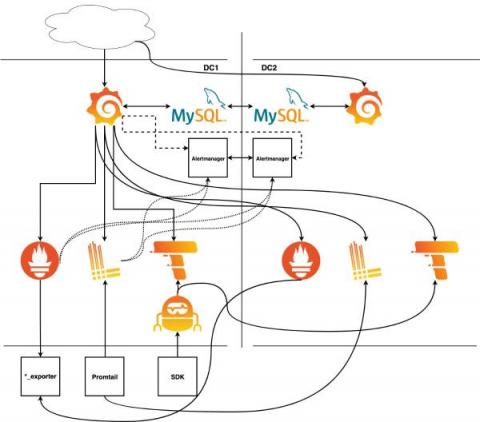
Bram Vogelaar is a DevOps Cloud Engineer at The Factory, and he recently delivered an intro to observability talk during our Grafana Labs' EMEA meetup. When I talk to customers, they might tell me about how their applications are running in two data centers, but when we probe a little further, it turns out that their observability stack is only available in one of them. This revelation hit close to home last March.
In version v1.32 of Netdata, we announced a remarkable new update that we are extremely proud of; Netdata Cloud now runs on the most reliable and stable backend that we’ve ever built. The architectural changes allow us to deliver new features, such as parent-child relationships and improved alert handling.