Operations | Monitoring | ITSM | DevOps | Cloud

The Place Where Modern Operations & Technology Come Together

The latest News and Information on API Development, Management, Monitoring, and related technologies.


New in Playwright: Your Agent Can Now Read Traces
Since Playwright 1.59, the new "trace" command makes your test traces fully accessible in the terminal. All plain text, and your agent will love it. And if you're running Playwright with Checkly, our AI agent, Rocky, already reads your traces and delivers root-cause analysis before you even start digging.
Instant Kubernetes Observability with Proxymock #speedscale #kubernetes #ebpf #devops #cloudnative
Learn how to get instant observability into your Kubernetes cluster by installing the Speedscale operator and proxymock tool. In this step-by-step tutorial, we walk you through setting up the operator to capture live network traffic (including encrypted traffic, API calls, and database calls) without complex instrumentation or manual configuration.
Catch Issues BEFORE Production! #speedscale #vibecoding #devops #sre #softwareengineer
Instead of waiting for an alert to trigger a long, stressful triage and replication process, catch the issue before it reaches production by replaying real traffic against your code first.
New AI Features in Playwright (Live-Webinar)
An AI agent that can't open a browser is just guessing. Stefan from Checkly shows how giving AI coding agents a real browser via Playwright enables reliable end-to-end test generation and debugging, closing the quality gap created by faster, AI-driven shipping. The session compares Playwright MCP vs the Playwright CLI for agent workflows, showing that thanks to MCP spec changes, lazy tool loading, and skills, the two are now effectively just different interfaces to the same tool, with no real token advantage either way.

5 Best Video Caption Generation APIs for Developers
Adding captions to video at scale is a lot harder than it looks. The best video caption generation APIs have to handle accent diversity, timestamp drift, multilingual rendering, and real-time processing all at once, and most developers don't realize how challenging that gets until something breaks in production. After reviewing the leading platforms in this space, one thing became clear: the gap between a generic transcription tool and a purpose-built captioning API is huge. This guide covers five of the strongest options available right now, comparing their technical depth, pricing, and real-world fit.

From OpenAPI to MCP: A Practical Access Layer for AI Clients
Connecting an AI client to a REST API looks simple until the first real production requirement appears. The client needs to discover operations, understand request schemas, authenticate safely, respect write restrictions, and handle credentials without copying them into every desktop configuration. A thin wrapper around HTTP rarely solves all of those problems.
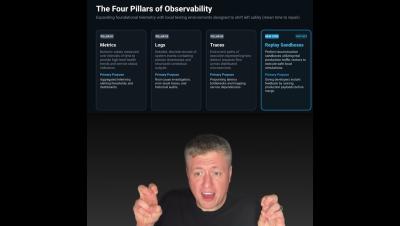
AI is Exposing Observability's Dirty Secret
The 3 pillars of observability are breaking. For years, dev teams relied on Logs, Metrics, and Traces to know when something went wrong. But now? AI agents are writing, deploying, and changing code in real-time. When an AI hallucination pushes a bug to production, standard monitoring sees nothing wrong.To survive the AI era, we need a 4th Pillar of Observability. Watch to find out what it is and why the old way of monitoring just became obsolete.
Sponsored Post
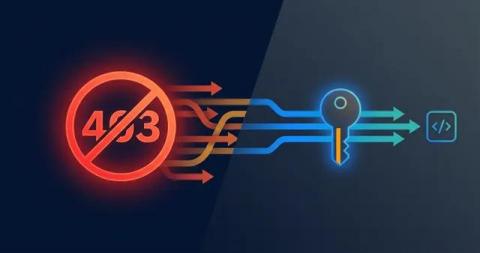
Fixing 403 auth errors when you replay traffic
Trigger warning: this one is about Java, authentication, and Docker Compose files. If that is not your thing, I am sorry, but they are part of life and they are honestly not that hard to work with. Everything here is open source on our GitHub repo, so you can follow along. Recording an authenticated Java flow, replaying it, hitting the dreaded 403, and fixing it with a proxymock recommendation.