Operations | Monitoring | ITSM | DevOps | Cloud

The latest News and Information on API Development, Management, Monitoring, and related technologies.

What Your Engineering Team Means When They Say "We Need a Better Solana API"

If your engineering lead has asked for a budget to upgrade your Solana infrastructure, you've probably heard about APIs, RPC nodes, latency, and landing rates. And if you are like most non-technical executives, you nodded, approved a line item, and moved on. This post is the translation layer. A Solana API is the single connection between your product and the blockchain it runs on. When that connection is slow, unreliable, or undersized, your users feel it before your dashboards show it.

Nano Banana 2 API in Production: Real Use Cases and Why APIPASS Makes It Accessible

That first question is not which of the models in Google's Nano Banana model family looks better on a benchmark, but instead, which should you actually ship with? Nano Banana Pro has always had the luxury edge: higher reasoning, maximal photorealism, studio-grade fidelity. Nano Banana 2, based on Gemini 3.1 Flash Image, came with an entirely different promise - the Pro-world knowledge and output quality to Flash-speed infrastructure at penny-pinch levels of pricing.

FastAPI Testing: Mock LLM APIs for Free

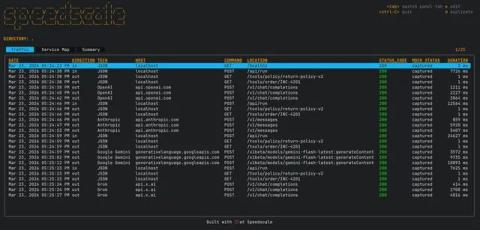
Testing a FastAPI app that calls OpenAI, Anthropic, or Gemini gets expensive fast. The problem is not just the API bill in production. It is all the repeated traffic in development: prompt tweaks, CI runs, regression checks, and the load tests you keep putting off because every run burns tokens. Hand-written mocks do not help much once the app is doing multi-step LLM work.

API Availability Monitoring: How to Measure True API Availability

APIs are no longer just integration layers. They power customer logins, payment processing, SaaS workflows, partner ecosystems, and mobile applications. When an API becomes unavailable, revenue stops, user trust declines, and service level agreements are immediately at risk. Yet many teams still define API availability in the simplest possible way. If an endpoint responds with a 200 OK, the API is considered available. Monitoring dashboards stay green. Alerts remain silent. Everything appears healthy.

API Error Monitoring: A Complete Guide to Detecting and Resolving API Failures

APIs power nearly every modern digital experience. From mobile apps and SaaS platforms to payment gateways and internal microservices, APIs handle authentication, transactions, content delivery, and system-to-system communication. When an API fails, users often experience broken features, slow responses, or complete service outages. In many cases, they leave before your team even realizes something is wrong. The business impact of API failures is significant.

The Hidden AI Bill: Why Non-Prod LLM Costs Spiral

Most teams know they are spending money on AI in production. Far fewer realize how much they are spending outside production. It’s easy to get lost as you evaluate which model has the best responses, is fast enough, and cheap enough to run in production. That is because the AI bill usually shows up as a giant blob. It is easy to see the total.

API Response Time Monitoring: Metrics, SLAs & Optimization Guide

Modern applications are powered by APIs. Every login request, checkout transaction, mobile interaction, and third-party integration depends on APIs responding quickly and reliably. When an API slows down, the entire user experience suffers. Even a one-second delay in response time can: For ecommerce platforms, fintech systems, SaaS products, and real-time applications, slow APIs do not simply create inconvenience. They directly affect revenue, customer retention, and operational stability.