Operations | Monitoring | ITSM | DevOps | Cloud

How to Search through LogDNA Archives

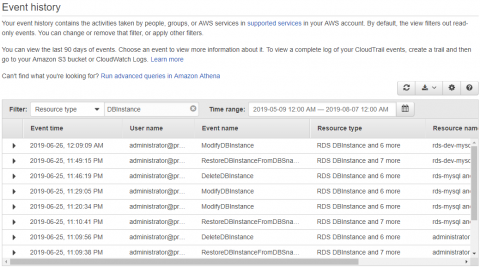
Retention is a crucial factor in adopting a log management solution. For most organizations, 30 days is a perfect balance between having to access historical log data and the high cost of storage. However, some organizations need to retain logs for a much longer period of time, whether it’s to comply with regulations, perform frequent audits, or monitor changes to operations over time.

Deep Learning for Time Series Data (O'Reilly Artificial Intelligence Conference)

Arun Kejariwal and Ira Cohen, both thought leaders in the deep learning space, share a novel two-step approach for building more reliable prediction models by integrating anomalies in them. They then walk you through marrying correlation analysis with anomaly detection, discuss how the topics are intertwined, and detail the challenges you may encounter based on production data. Present at the 2019 O'Reilly Artificial Intelligence Conference.

Getting Started with Free Elasticsearch Security Features

Elasticsearch Security: learn how to easily add new users, create roles, and set privileges using the Elastic Stack (6.8/7.1+). You'll create a 2 node Elasticsearch cluster, configure TLS communication between the nodes, and have a Kibana instance talking to the cluster to analyze the data.

Predictive Maintenance: What's the Economic Value?

The global predictive maintenance market is expected to grow to $6.3 billion by 2022, according to a report by Market Research Future. However, a new paradigm is required for analyzing real-time IoT data. Predictive maintenance, which is the ability to use data-driven analytics to optimize capital equipment upkeep, is already used or will be used by 83 percent of manufacturing companies in the next two years.

Extend Your Operational Analytics Beyond IT and Improve Your Business Outcomes

Operational analytics is of vital importance to IT organizations today. With complex hybrid infrastructures and dynamic workloads commonplace in many businesses, the ability to monitor important metrics like application performance requires a level of automation and analysis that can quickly turn data into useful information for your IT team.

How to Monitor Apache Web Server

In order to effectively manage and monitor your infrastructure, a web admin needs clear and transparent information about the types of activity going on within their servers. Server logs provide a documented footprint of all traffic and errors that occur within an environment. Apache has two main log files, Error Logs, and Access Logs.

Apache Error Log & Apache Access Log: Complete Guide to Analyzing and Troubleshooting Apache

+ Bonus: 20 Apache errors – a free checklist Apache error logs and Apache access logs contain valuable data. In this article, we explain how the log files generated by the Apache web server are an important factor in keeping your web sites and apps running 24/7. We show you how to effectively use Apache logs to monitor and troubleshoot Apache log files, to protect and fix your web server. Want to get Apache/Tomcat/Log4J insights right away?

Who Will Win and Who Will Die: 'Game of Throne' Fans Use Data Analysis to Predict What Happens Next

In the era of Peak TV, there is probably no more emblematic version of worthy binge watching than “Game of Thrones”. At the cusp of the series’ eighth and final season, the internet is buzzing with some painstaking analysis – using algorithms, AI, and big data sets, to find hidden Easter eggs. The numbers capture the mind-boggling detail author George R. R. Martin weaved into his novels and how easy it is to get lost in a fictional world as intricate as our own.