Mailchimp
Not subscribed to OpsMatters Newsletter


The 21st Century Integrated Digital Experience Act (IDEA) recently celebrated its one year anniversary. The goal of the legislation is to improve the way citizens interact with the federal government. The ability to provide a modern digital experience to citizens and employees is now a basic expectation for all federal chief information officers (CIOs). Today, trust in institutions is near historic lows, setting the stakes for successful digital transformations at an all-time high.
In a pandemic, it’s critical for government agencies and healthcare providers to mobilize quickly. Washington State is ground zero in the United States for COVID-19 where the first US deaths were reported in February 2019, according to the Centers for Disease Control. Since then the disease has spread to nearly every state in the country, and is now a global pandemic. Health officials have been working around the clock to contain the virus.
Today ServiceNow announced a customer care plan to support our public and private sector customers in managing the COVID-19 pandemic. As part of this effort, we’re announcing four new community apps to help our customers, including government agencies and enterprises, manage complex emergency response workflows. These apps are now available at servicenow.com/crisisresponse for customers to access free of charge through September 30, 2020.
So your organization has decided to move to the cloud. Smart move! Many companies today are either making the move to the cloud or have already made it. According to RightScale’s 2019 State of the Cloud Survey, 94% of IT professionals say their companies use the cloud. Over 90% is public cloud. Gartner predicts that public cloud revenue will increase by 17% in 2020. The biggest percentage increase is expected with IaaS. So, you’re clearly not alone.
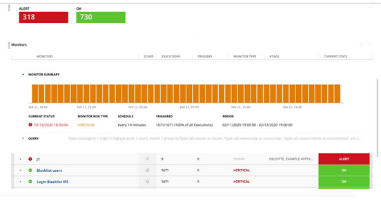
Let’s start with a simple picture and a question. You are involved in the day-to-day running of a complex and hybrid cloud of IT systems and applications. These systems, technologies, applications, processes and other platforms perform a number of critical business functions.
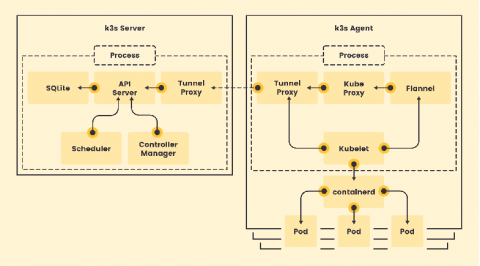
This blog post is an adaptation of a talk I gave at the Cloud Native meetup in Birmingham in the UK in February 2020. It details the advantages of k3s, a lightweight Kubernetes distribution we have deployed as part of a managed Kubernetes service. Developed by Rancher Labs, k3s allows for quick deployments for testing, CI/CD runs and getting to grips with Kubernetes without having to commit to large-scale infrastructure and the costs that would bring.
Five worthy reads is a regular column on five noteworthy items we’ve discovered while researching trending and timeless topics. This week, we explore the concept of alternative data.