Operations | Monitoring | ITSM | DevOps | Cloud

The latest News and Information on Distributed Tracing and related technologies.

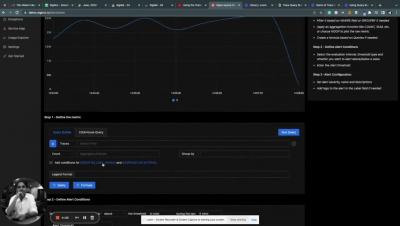
Redis Monitoring with OpenTelemetry and SigNoz

In this post, we will show you how to set up Redis monitoring with SigNoz - an open-source full-stack APM. SigNoz captures data using OpenTelemetry, which is becoming the world standard for instrumenting cloud-native applications. Apart from capturing metrics from your Redis server, you can also capture logs and traces with OpenTelemetry.

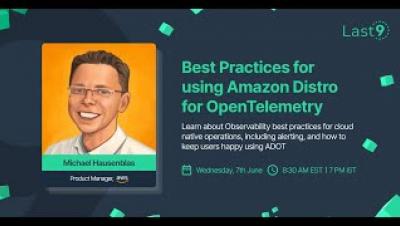
AMA: Getting Started with OpenTelemetry and Sentry

Join the Sentry developers who built Sentry’s OpenTelemetry support and learn how to understand the performance of your OTel instrumented applications. As the leading open standard for observability, thousands of companies use OpenTelemetry to capture data across their services - but capturing raw logs, traces, and metrics is only the first step in improving software performance.

Easily configure Elastic to ingest OpenTelemetry data

Watch how to easily configure your application to ingest Elastic OpenTelemetry data. About Elastic Elastic is the leading platform for search-powered solutions, and we help everyone — organizations, their employees, and their customers — find what they need faster, while keeping applications running smoothly, and protecting against cyber threats. When you tap into the power of Elastic Enterprise Search, Observability, and Security solutions, you’re in good company with brands like Netflix, Uber, Slack, Microsoft, and thousands of others who rely on us to accelerate results that matter.

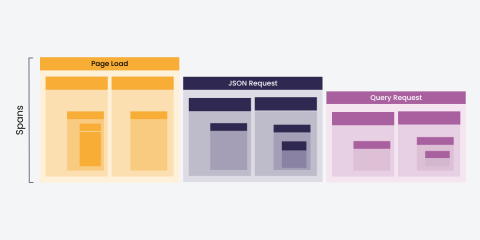
OpenTelemetry Browser Instrumentation Complete Tutorial

Browser instrumentation refers to collecting and analyzing data about a user's interactions with a web browser. This type of instrumentation involves using specialized tools and techniques to gather information about how a website is being used, such as page load times, network requests, and user interactions. The data collected through browser instrumentation can be used to improve website performance, identify and troubleshoot errors, and gain insights into user behavior.

Deploy Open Telemetry to Kubernetes in 5 minutes

OpenTelemetry is an open-source observability framework that provides a vendor-neutral and language-agnostic way to collect and analyze telemetry data. This tutorial will show you how to integrate OpenTelemetry on Kubernetes, a popular container orchestration platform. Prerequisites.

A Beginner's Guide to OpenTelemetry

OpenTelemetry (OTel) is an open-source observability framework that provides a standardized way of collecting, processing, and exporting telemetry data (metrics, traces, and logs) from distributed systems. It was born by a merger between two previously separate observability projects, OpenCensus and OpenTracing, and it is currently maintained by the Cloud Native Computing Foundation (CNCF).

The Importance of Azure Distributed Tracing in Integration Services

Distributed Tracing, combined with end-to-end monitoring, lets organizations keep track of their business transactions and receive alerts when anomalies happen. End-to-end monitoring benefits business users and functional administrators more than developers and technical administrators. Nowadays, for developing integration solutions, microservice architectures are becoming the norm. A solution based on such an architecture relies on different services that shape a specific solution together.

Understanding Distributed Tracing with a Message Bus

So you're used to debugging systems using a distributed trace, but your system is about to introduce a message queue—and that will work the same… right? Unfortunately, in a lot of implementations, this isn't the case. In this post, we'll talk about trace propagation (manual and OpenTelemetry), W3C tracing, and also where a trace might start and finish.