The latest News and Information on APIs, Mobile, AI, Machine Learning, IoT, Open Source and more!
Ok, not completely true. I also use Stripe, Github, AWS, Heroku, Ghost, AppOptics, Intercom and Mailchimp. And some bookkeeping and tax tools. Don't forget the code editors! But! When I plan my day, I spend most of my time in Trello and Apple's stock Reminders app. I also use Numbers once a week or so. This post is turning out to be click bait. Read on, it's really not. In former jobs I went through probably every project management and productivity tool out there.
Recently I pushed a long overdue feature for Checkly: SSL for customers' public dashboards. This was kinda, sort of, totally missing when I launched and many customers asked for it. Setting up free SSL turned out to be fairly smooth because of Most principles explained here are totally transferable to whatever stack you are using. There are some pretty important gotcha's though, so let's dive in. Customers of Checkly can create public dashboards and host them on a custom domain.
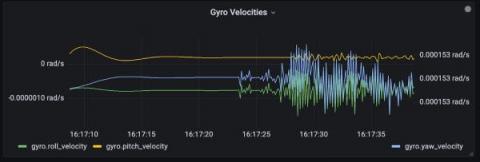
AMMP Technologies runs monitoring for energy systems, usually off mini-grids in Africa. The company uses Grafana to monitor interface with physical objects that are not servers or containers. “It’s interesting how a toolkit for visualizing essentially internet/computer/server metrics is so well-suited to working with real-life streaming data,” AMMP Cofounder Svet Bajlekov said during his talk at GrafanaCon L.A.
Pulling in data exposed via API is not one of the most common use cases for ELK Stack users but it is definitely one I’ve come across in the past. Developers wrapping their database services with REST API, for example, might be interested in analyzing this data for business intelligence purposes. Whatever the reason, the ELK Stack offers some easy ways to integrate with this API. One of these methods is the Logstash HTTP poller input plugin.
A few members of the Scout team had the chance to head to Monitorama in Portland, Oregon this week. For those who do not know what Monitorama is, it is a 3-day, open-source monitoring conference with a single track. There is plenty of time during the breaks to chat with attendees, ask the speakers questions or just catch up on some email.