Operations | Monitoring | ITSM | DevOps | Cloud

The latest News and Information on APIs, Mobile, AI, Machine Learning, IoT, Open Source and more!

Groq vs. GPUs: The future of AI inference in 2026

Back in 2016, Jonathan Ross founded Groq, the AI chip startup, which went on to enter a non-exclusive licensing agreement with NVIDIA for Groq’s inference technology (as part of a $20 billion deal). The name ‘Groq’ is commonly confused with X (formerly Twitter)’s Grok, which was launched in 2023 as a Gen AI chatbot. As demand for real-time AI continues to grow, inference has become one of the most important and expensive parts of the machine learning lifecycle.

Women's Day Panel: Navigating the Future of Engineering in the Age of AI

How is AI reshaping engineering—and what does it mean for the future of work? At our first GTA Boston Hub event of the year, we brought together engineering leaders from Boston Consulting Group and Athenahealth to dive into one of the most pressing topics today: the rise of generative AI. In this panel, we explore: Key takeaway: This isn’t “human vs AI”—it’s human augmented by AI. The real advantage lies in how we adapt, collaborate, and lead in this new era.

The Secret to 10x Faster API Testing #speedscale #apitesting #api #automation #production

Stop living in the past. See how to use real production traffic to automate your API testing with zero code changes. Replay real-world patterns in your CI/CD and catch regressions before your users do. Learn more: speedscale.com.

One CLI, Two Audiences: How We Built for Agents and Human

Half of the Checkly CLI users are already coding agents. This is not a prediction — it's what the data shows today. Since February, more and more agents have been using the CLI to manage and configure their Checkly monitoring setups. Right now, we're at 50% human and 50% agentic CLI users. And we predict that by the end of 2026, it won't be humans using the CLI; the agents will have taken over. The terminal became the primary interface for AI agents doing real work in the Checkly ecosystem.

Checkly and the Agentic Software Layer

November 24th, the Opus 4.5 release turned around the entire tech industry. This was the moment when agents became capable. Capable enough to write solid staff-level code. Capable enough to reason about alerts, investigate root causes much faster than most engineers, and set up the reliability layer faster. For me, this feels like an iPhone moment on steroids; the adoption of AI is accelerating much faster than any adoption curve I’ve seen over the past few decades.

The Future of Kafka and Steaming

Join Jeff Mery and Josep Prat as they discuss the future of Kafka and Streaming. In this deep dive, we break down the architectural shifts and hidden "taxes" currently hitting the data streaming ecosystem—and how to engineer your way out of them. In this video, you’ll see: The "Streaming Tax" Breakdown: A transparent look at how 3x replication, inter-AZ egress, and eCKU markups are inflating your TCO by up to 500%.

How to Reduce MTTR with AI

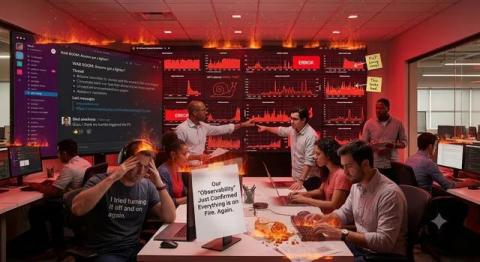
The quick download: AI reduces MTTR by helping teams detect issues sooner, pinpoint root causes faster, and resolve incidents with less manual effort. IT downtime costs organizations an average of $9,000 per minute. AI-powered observability can cut incident resolution time by up to 70%. Here’s what it takes to get there. Every minute an incident goes unresolved, the meter is running.

Automate Your Monitoring and Incident Handling: How Agents Dominate the Checkly CLI

50% of Checkly's CLI users are already coding agents. We predict that agents will become dominant by the end of 2026. This video demonstrates an agentic workflow where an alert reports a broken Shopify store login flow, and Claude Code, using the installed Checkly Skill and the Checkly CLI, pulls monitoring results, identifies a Playwright test failure, investigates the codebase, finds and fixes a bug, and then updates a Checkly status page by creating an incident.