Operations | Monitoring | ITSM | DevOps | Cloud

The latest News and Information on APIs, Mobile, AI, Machine Learning, IoT, Open Source and more!

Ai4 2026: Measuring AI spend is solved. Now it's time to prove its worth.

CloudZero had a full team on the ground at Ai4 in Las Vegas during the first week of August 2026. The team included CTO Erik Peterson, who spoke on a panel about AI cost economics. The same problem surfaced everywhere we went: teams can see what they’re spending, but not whether it’s working. DIY cost tooling that fails time and time again, agent sprawl, and a widening gap between finance and engineering kept coming up throughout the week.

What are AI tokens? The unit your AI bill is written in

AI tokens are the small chunks of text, roughly four characters or three quarters of a word each, that language models read and generate. Every prompt and every response is measured in tokens, and AI providers bill per million of them. That makes the token the base unit of AI spend: 1,000 tokens is about 750 words, and every AI feature you ship is a token meter running.

What is AI ROI? Definition and why it matters

In 2025, 85% of organizations increased AI investment, and 91% plan to do the same this year, according to Deloitte. Despite continued spending, however, ROI lags behind, with just 6% seeing payback within one year. While AI use cases tend to have a longer payback period, often in the 2-4 year range, companies can’t afford to keep spending money without some measure of its practical impact both immediately and over time.

Introducing the Flyway MCP Server: governed database change, now available to your AI coding assistant

AI coding assistants have changed how fast application code gets written. Copilot, Cursor, Claude Code, and agentic tools built on top of them can generate a working feature in minutes. But none of them know your database's history. They don't know that a migration already renamed that column last sprint, that a policy forbids unqualified DELETE statements, or that the target environment has drifted from what your migrations say it should look like.

Paste a Slack Bug Report into an AI SRE Agent: AURA Finds the Cause

A coworker says checkout is broken and nothing else. That is the whole prompt. AURA reads the live logs and comes back with the payment service. Normally a message like this is the start of guessing at a service and opening dashboards until something looks wrong. Here it is the entire input: no service named, no error string, no time range.

Kernel-Level Visibility Without Instrumentation: What eBPF Changes for Container Security

Containers have changed how applications are built and deployed, but they have also made security visibility more difficult. Workloads are short-lived, services communicate constantly, and application behavior is distributed across containers, nodes, APIs, processes, and open-source dependencies. This is why many security teams are pairing eBPF with application-level runtime security. eBPF observes activity from the Linux kernel without requiring teams to modify every application, while runtime application security explains which code caused that activity.

What Does End-to-End Quality Management Look Like in Modern Manufacturing?

Manufacturers manage inspections, supplier performance, audits, corrective actions, and compliance activities every day. Separate systems and manual processes can slow decisions, create duplicate records, and reduce visibility across operations. A connected quality approach helps teams maintain consistent standards while improving efficiency throughout the organisation.

How a Shared Case Dashboard Keeps Hundreds of Court Dates Straight

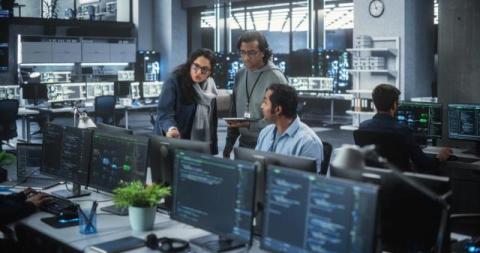
Walk into the operations floor of a large regional law firm on any given morning and the first thing you notice is not the stacks of paper you might expect. It is the wall of monitors, each one displaying a rolling feed of court dates, filing deadlines, and case statuses updated in real time. For firms handling volume caseloads, especially those built around traffic and misdemeanor defense, this kind of shared visibility has become the backbone of daily operations. The technology behind it did not arrive overnight, but its effect on how large practices manage hundreds of active matters at once has been substantial.