Downloading and Installing cf-remote
This video shows how to download and install cf-remote.


About a year ago, I wrote a small python script to automate installing and bootstrapping CFEngine on virtual machines in AWS. It had some hard coded IP addresses that I needed to update when I spawned new hosts, but other than that, it worked well. During manual testing, it saved me a lot of time instead of having to do things manually.
2019 has been a fun year for Sentry, and we’re only a third of the way through it. In four short months, we released a feature set focused on visibility as well as the new Sentry Integration Platform. In between the big stuff, we shipped the following changelog from the past month. Enjoy.
AWS Beanstalk allows you to spin up entire environments (EC2 instances, ELBs, etc.) to support an application without you having to configure the resources manually. However, since it’s a managed service, you have less visibility with traditional monitoring tools. As such, it becomes even more important to take advantage of the available monitoring tools in AWS. In this post, we’ll explain how to use CloudWatch to monitor Beanstalk and what is important to watch.
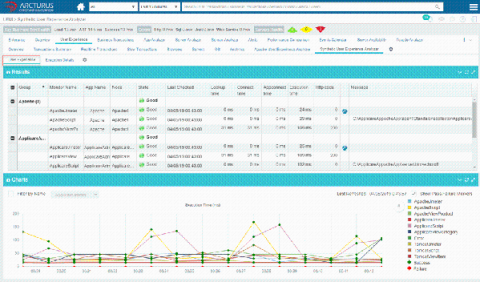
Synthetic Monitoring is referred to as an approach of testing a web service or a website by simulating the website visitors’ requests across various geographies in order to test its availability and performance. One can compare performance stats of different geographies and formulate performance improvement plans. Synthetic monitoring lets you find problems before your customers do leading to shorter MTTR.
In order to carry out a demonstration of our smart tool: the Bleemeo agent at the 8th Devoxx France conference planned for the 17th of April, Bleemeo team decided to use the Kubernetes infrastructure and specially the lightweight version of Kubernetes: k3s. We choose to run k3s on a cluster of 3 Raspberry Pi nodes composed of 1 master node and 2 slaves nodes.
At Mattermost, we built an intuitive workplace messaging platform that all kinds of teams can use productively right away, regardless of technical prowess. That said, we understand that learning new platforms isn’t always the easiest thing in the world. Some Mattermost users will have longer learning curves than others, and that’s perfectly okay. We all march at different speeds.