Operations | Monitoring | ITSM | DevOps | Cloud

Three Reasons You Should Consider Hiring a Financial Cloud Operations Manager

If you're running in the cloud and ever struggle to predict, report on, or attribute your cloud costs, you may want to consider a new kind of role: A Financial Cloud Operations Manager. While a traditional cloud operations manager may sit on the DevOps team or report to an engineering lead, a financial cloud ops manager’s reporting structure is slightly different.


No CMDB? No problem. Not for BigPanda.

I hear it all the time when talking to future BigPanda customers; “I’m not sure BigPanda can really help me correlate all these alerts together because our CMDB is very immature.” Or sometimes, they don’t even have a CMDB, and incorrectly assume this disqualifies them from meaningful noise reduction and alert correlation. I’m happy to tell you the same thing I tell the folks who are looking at BigPanda for the first time. “No CMDB? No problem!”.

5 Best Practices for Using AI to Automatically Monitor Your Kubernetes Environment

If you happen to be running multiple clusters, each with a large number of services, you’ll find that it’s rather impractical to use static alerts, such as “number of pods < X” or “ingress requests > Y”, or to simply measure the number of HTTP errors. Values fluctuate for every region, data center, cluster, etc. It’s difficult to manually adjust alerts and, when not done properly, you either get way too many false-positives or you could miss a key event.

AI/ML - Are We Using It in the Right Context?

There used to be a distinct, technical separation between terms such as AI and machine learning (ML) – but only while these technologies remained largely theoretical. As soon as they became practical in the real world, and then commodifiable into products, the marketers stepped in. Widespread overuse of the terms AI/ML in marketing have managed to thoroughly confuse the meanings of these words.

Solving the Search & Analytics Challenge on Cloud Storage at Scale

I have been super fortunate to work with incredibly innovative, talented teams that create powerful technology to help manage the world's data. When I met with Thomas Hazel, CHAOSSEARCH founder and CTO, and Les Yetton, CHAOSSEARCH co-founder and CEO to talk about CHAOSSEARCH — scalable, performant text search to your object storage without having to move any data — I knew it was special and was eager to join.

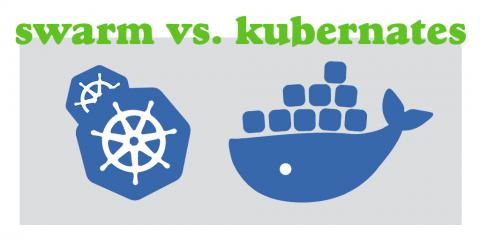
Docker Swarm vs Kubernetes: A Helpful Guide for Picking One

Docker and Kubernetes have taken the software world by storm. DevOps, containers, and container management are at the center of most conversations about what’s relevant to technology. Tooling and services that ease running software in containers, therefore, occupy the minds of developers. Great tools and platforms create options and possibilities. They also create challenges in understanding available choices, though.

Coding for Performance: Why We Chose Rust

The next major version of the LogDNA agent is right around the corner, and we’re introducing some significant improvements. Most notably, we’ve completely rewritten the agent using Rust instead of Node.js. As we gear up for the release, we wanted to explain why we chose Rust for the LogDNA agent, the benefits that it offers over other languages, and how it can help you log faster. Rust is a systems programming language that aims to offer both performance and safety.

How to use ApacheBench for web server performance testing

When developing web services and tuning the infrastructure that runs them, you’ll want to make sure that they handle requests quickly enough, and at a high enough volume, to meet your requirements. ApacheBench (ab) is a benchmarking tool that measures the performance of a web server by inundating it with HTTP requests and recording metrics for latency and success.