Operations | Monitoring | ITSM | DevOps | Cloud

What To Do When You Have 1000+ Fields?

So you have been adding more and more logs to your Graylog instance, gathering up your server, network, application logs and throwing in anything else you can think of. This is exactly what Graylog is designed for, to collect all the logs and have them ready for you to search through in one place. Unfortunately, during your administration of Graylog you go the System -> Overview screen and see the big bad red box, saying you are having indexing failures.


Maximize Observability of your CI/CD Pipeline with LogDNA

Continuous integration and continuous deployment (CI/CD) has enabled teams to build and deploy software at a much faster pace. DevOps teams can build, test, and deploy changes to production in a matter of minutes, allowing for extremely rapid release cycles. However, a CI/CD pipeline has a lot of moving parts and steps where problems to occur. In order to ensure a successful deployment, it’s important to monitor each step in this process.

Get Going with SNS

Every day that I commute home, I check Google Maps for the next Trimet bus arrival at the usual stop. There’s nothing wrong with this ritual but it always distracts or leaves me stalled for a few empty minutes. Ever the proponent of laziness automation, I decided to build a stack that will do this for me by texting incoming arrival times for my bus home.

Why You Should Use API Gateway Proxy Integration With Lambda

Ben Kehoe wrote a post about AWS API Gateway to Lambda integration: How you should — and should not — use API Gateway proxy integration with Lambda. In his post, Ben gave a few reasons why he believes using API Gateway Proxy Integration is an anti-pattern. Ben does a great job summarizing how the integration works. He writes: The pattern that I am recommending against is the “API Gateway proxy integration” as shown in the API Gateway documentation here.

AWS Step Functions 101

We are going to talk about an essential part of AWS Lambda called “AWS Step Functions.” What are Step Functions? Why are they important for AWS Lambda users? What are they used for, and what can we expect to get by using them? Bare with us, and discover more critical information on Step Functions throughout this article. We’ll begin with the explanation of what are Step Functions. AWS Step Functions service is the most recent service released by none other than Amazon Web Services.

Is AWS Lambda actually useful?

If you’re in developing business, you’ve probably heard about AWS Lambda by now. In case you haven’t, AWS Lambda has been among us for years, and it certainly brought a whole new level for running a code. The benefits of using AWS Lambda are vast, and many developers already use AWS Lambda daily. If you’re not among them, read through this article to learn more about what AWS Lambda can do for you and your code.

Agent Smith materializes from the matrix of Android malware

There’s a new shapeshifting strain of Android malware in the mix. It replaces legitimate apps with compromised ones and is imaginatively named Agent Smith after the iconic villain in The Matrix. Yet another malware attack targeting Android—so what’s the big deal? Agent Smith is similar to other malware campaigns such as Gooligan, HummingBad, and CopyCat with respect to the destruction it can cause via fraudulent ads.

Bringing AIOps to Hybrid Cloud Monitoring and Management

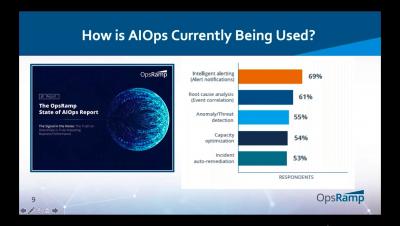
Artificial intelligence for IT Operations is purpose-built to ingest large sources of data from infrastructure and point tools, and produce actionable insights on root-cause analysis and incident remediation. How do you bring these innovations to an enterprise ecosystem that’s also in the middle of cloud migration and overall digital transformation?

The Three Pillars of Kubernetes Observability

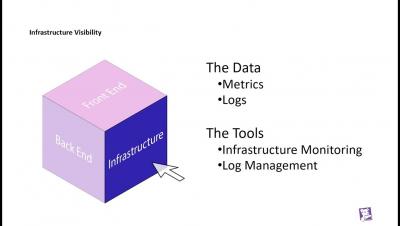
The three pillars of observability are metrics, logs, and traces. To get a complete view into your applications as well as the Kubernetes platform they run on, you need to be looking at all the different perspectives. In this session, we will look at each pillar to see how we can use the information collected to understand what is happening in our environment today and how to troubleshoot the problems we experience tomorrow. We will share how to do this using various open source tools as well as using the Datadog platform.