Operations | Monitoring | ITSM | DevOps | Cloud

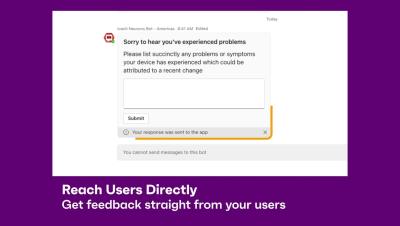
Sentiment Survey Bot in 60 Seconds

Ivanti's Sentiment Survey Bot allows IT teams to automatically reach out to users following any major IT change, gathering invaluable sentiment data to help remediate any resulting issues and letting you track your users' experience over time. Ivanti finds, heals, and protects every device, everywhere – automatically. Whether your team is down the hall or spread around the globe, Ivanti makes it easy and secure for them to do what they do best.

What is High Cardinality Data and Why Does It Matter?

High cardinality data refers to datasets containing a large number of unique values, such as user names, email addresses, or product codes. Managing this type of data can be challenging due to its rapid growth and complexity, making analysis more difficult. However, high cardinality data is highly valuable as it can show significant patterns and insights.

Looking beyond the M25 to drive regional data centre growth

The Foundations of the Future report commissioned by techUK, and developed by Henham Strategy, makes for incredible reading. As a sector, the UK data centre industry is worth £4.7 billion in Gross Value Added (GVA) annually, supporting 43,500 jobs and contributing £640 million in revenue to the exchequer. When you consider that this has happened in less than 35 years, this is remarkable.

Unlock Enhanced Item Management with Our Revamped Related Tab

We’re excited to share some great news about our Related Tab feature! We’ve listened to your feedback and made big improvements to help you manage and investigate your items more easily. The Related Tab is a helpful tool that shows you other items related to the one you’re looking at. This makes it easier to see if the same issue is happening in different parts of your code base or if there are similar items that might be connected.

Latest Product Updates and Features in Logz.io | January 2025

We’re thrilled to launch our brand-new and improved Support Help Center, designed to streamline how you interact with our support team and access the resources you need. This enhanced platform empowers users to: This is more than just a support portal—it’s a centralized hub to enhance your experience, provide solutions faster, and keep your feedback front and center in our development process. Explore our new Support Help Center for answers and assistance!

Key metrics for monitoring Snowflake cost and data quality

Snowflake is a self-managed data platform that enables users to easily store, process, analyze, and share high volumes of structured and semi-structured data. One of the most popular data platforms on the market, Snowflake has gained widespread adoption because it addresses a range of data challenges with a unified, scalable, and high-performance platform. Snowflake’s flexibility enables users to handle diverse workloads, such as data lake and data warehouse integration.

Tools for collecting and monitoring key Snowflake metrics

In Part 1 of this series, we looked at how Snowflake enables users to easily store, process, analyze, and share high volumes of structured and semi-structured data, as well as key metrics for monitoring compute costs, storage, and datasets. In this post, we’ll walk through how to collect and analyze these metrics using Snowsight, Snowflake’s built-in web interface.

How to monitor Snowflake performance and data quality with Datadog

In Part 2 of this series, we looked at Snowflake’s built-in monitoring services for compute, query, and storage. In this post, we’ll demonstrate how Datadog complements and extends Snowflake’s existing monitoring and data visualization capabilities, enabling teams to get deeper visibility and extract more valuable insights from their Snowflake data.

How Profiling helped fix slowness in Sentry's AI Autofix

There’s a common misunderstanding that profiling is only useful for tiny savings that impact infra costs at scale - the so-called “milliseconds matter” approach. But by dogfooding our own profiling tools, we fixed a problem that saved tens of seconds off each user interaction with our AI agent (and for those of you who like math, that’s four orders of magnitude bigger than those milliseconds that matter).

Ops Centric AI: The foundation of best-in-class incident management

Your ITOps and Incident Management teams face thousands of alerts daily. How can they find the “needle in the haystack” to prevent critical alerts from escalating into incidents that impact users and customers? This challenge plagues modern IT departments as alert noise, fragmented data, and chaotic workflows extend response times and undermine service reliability.