Operations | Monitoring | ITSM | DevOps | Cloud

Breakpoint recap: Uptime Monitoring, robots, and feature flags galore

Bugs don’t announce themselves politely. They crash your checkout flow, break authentication, or slow your API to a crawl—usually right before your CEO asks how things are going. And when the error inbox is flooded with a hundred variations of TypeError: cannot read property of undefined, figuring out what actually matters can feel impossible.

Streamline IT incident response with the latest BigPanda features

Machine-generated data has exceeded human scalability, straining L1 Ops and Service Desk team resources. Fragmented data across tools, teams, and silos hinders situational awareness, delaying each action – from detection to remediation, making prevention increasingly unattainable. The latest BigPanda updates enhance ITOps and ITSM team efficiency throughout the incident lifecycle.

#036 - Beyond Kubernetes: A Radical Vision for the Future of Infrastructure with Adam Jacob (Syst...

Adam Jacob, CEO of System Initiative and original author of Chef, discusses the evolution of infrastructure automation and his career-long passion for infrastructure. Jacob reflects on the history and context of Chef, its emergence alongside EC2, and its role in configuration management. He shares insights into the competitive landscape of configuration management tools like Chef, Puppet, and Ansible, and touches upon the transition of Chef to Progress.

Microsoft Azure is Going Secure by Default. Are You Ready?

Developers aren't lazy – but sometimes cloud service defaults can be. Here’s what to look out for, and how Azure is changing the game. Let’s face it: Developers can sometimes be labeled as “laissez faire” when it comes to security. But is that really fair? In reality, it’s not about being lax or lazy; it’s about the default configurations of many cloud services setting the security bar too low on initial deployment.

Slicing Up-and Iterating on-SLOs

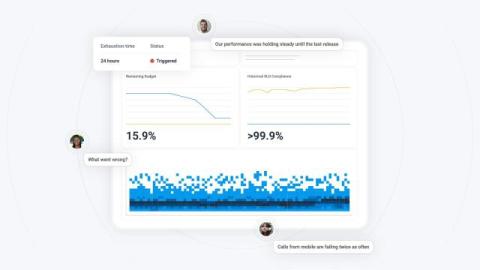
One of the main pieces of advice about Service Level Objectives (SLOs) is that they should focus on the user experience. Invariably, this leads to people further down the stack asking, “But how do I make my work fit the users?”—to which the answer is to redefine what we mean by “user.” In the end, a user is anyone who uses whatever it is you’re measuring.

Ask a Partner About the Mistakes That Were Made

Did you hear about the failed video conferencing project? During a global stakeholder meeting, an IT team deployed new video conferencing software without testing a default echo feature. Every participant heard their voice echoing back, disrupting the meeting until someone identified and fixed the setting. While relatively minor, this incident demonstrates how overlooked technical details can compromise professional operations. Consider the failed ERP rollout by a food distributor.

How to do Agentless Monitoring with check_by_ssh

The fundamentals of Icinga 2 are check plugins. They are being executed and their return value is mapped to either Host or Service objects. Everything else follows on top. These check plugins can be either from the Monitoring Plugins or custom. While their origin does not matter, they are the building blocks of an Icinga monitoring stack. If a plugin goes CRITICAL, Icinga 2 alerts the sysadmin.

Manage All Your App Notifications in One Place with AppSignal

Alerts and notifications are the backbone of any Application Performance Monitoring (APM) tool, ensuring your team is immediately aware of critical issues. At AppSignal, we’re always improving our toolkit to help you stay ahead of problems before they impact performance or reliability. We've made huge improvements to how you can manage your app notifications and alerts with AppSignal.