Operations | Monitoring | ITSM | DevOps | Cloud

The Shift to Proactive IT Management: How Infraon Leads the Way

For years, businesses relied on a reactive IT management approach, also known as the break-fix model—only addressing problems after they occurred. This method often led to unpredictable downtime, rising costs, and a struggle to scale with growing business needs. Without proactive monitoring, issues could escalate, causing major disruptions.

Coroot v1.9: Kubernetes-Native Database Monitoring Made Easy

From day one, we built Coroot to work beyond just Kubernetes. Many teams still run databases and other stateful services on dedicated VMs or bare-metal servers. But that’s starting to change. More and more teams no longer see Kubernetes as a platform just for stateless apps. Powerful Kubernetes operators now handle day-2 operations like failover, backups, and disaster recovery—making it easier than ever to run databases on Kubernetes. And the number of teams choosing this path keeps growing.

Ultimate Guide to Server Hardening for Kamal

Server hardening is securing a server by reducing its surface of vulnerability. This means minimizing the number of potential entry points for attackers by disabling unnecessary services, applying patches, and enforcing strong security controls. If you use Kamal to deploy applications but you must harden your servers yourself. This is a guide on the steps to take to have a secure server. The Basics of Server Security: Patch often and restart often. Patching helps with fixing known vulnerabilities.

Optimizing Item Search: How Rollbar Engineered Faster, More Capable Search

Searching through error data efficiently is critical for developers using monitoring tools. At Rollbar, we recently completed a significant overhaul of our Item Search backend. The previous system faced performance limitations and constraints on search capabilities. This post details the technical challenges, the architectural changes we implemented, and the resulting performance gains.

Is It Time to Switch Your Network Monitoring Tool? How to Know & Choose the Right Upgrade

A while ago, your company chose a network monitoring tool that worked perfectly — back when most employees worked in the office, networks were centralized, applications ran on-premise, and "the cloud" was just a buzzword.

Faster Releases, Fewer Bugs: Firmware Engineer Shares The Surprising Strategy

Shipping faster can seem risky, but Mark Schulte reveals why it might actually lead to fewer bugs. Discover the unexpected math behind releases and how a rapid approach enhances your debugging efficiency. Can breaking down changes hold the key to smoother deployments?

GitKraken Desktop Release 11.0: GitKraken AI

In this release, GitKraken evolves into your development co-pilot with new AI features designed to save time and reduce toil. Learn how to use AI-generated commit explanations, commit message generation, and how to customize your AI model settings with OpenAI, Anthropic, or Gemini—all included with your subscription.

Introducing the "retry" step failure strategy for Bitbucket Pipelines

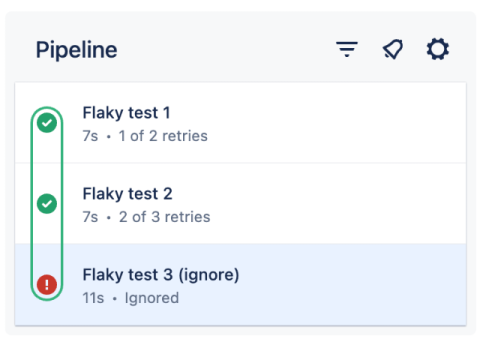
Recently we introduced support for Failure Strategies, which allows developers to implement more powerful logic and control flow into their workflows. Today, we are excited to announce a new step failure strategy, retry, which can auto-retry your failed steps without requiring any input from the user.