Operations | Monitoring | ITSM | DevOps | Cloud

APM Observability: A Practical Guide for DevOps and SREs

Modern application architectures have evolved from simple monoliths to complex distributed systems spanning multiple environments. This evolution has transformed how we approach monitoring and troubleshooting. Traditional monitoring methods that focus solely on uptime and basic health checks are no longer sufficient for understanding system behavior in cloud-native environments.
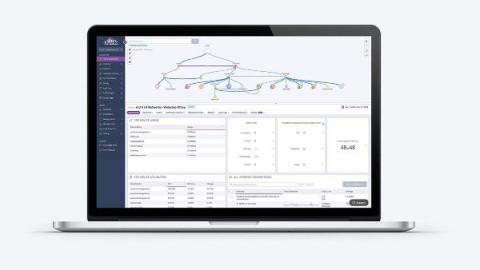

Cloud-Based Network Management: Benefits & How it Works

Managing networks has never been more complex—more devices, more remote work, and more security challenges. Traditional on-premise solutions can struggle to keep up, requiring constant maintenance and on-site troubleshooting. That’s why businesses are shifting to cloud-based network management, which provides real-time visibility, automation, and remote access to keep networks running smoothly.

6 Silent Traps Inside CloudWatch That Can Hurt Your Observability

One of the most common things we hear from our users, is how AWS costs keep increasing with CloudWatch often playing a big role. CloudWatch has long been the default observability solution for AWS users. While it’s great for some use-cases, it’s also important to check out and weigh other alternatives which could be better suited for modern observability demands. Let’s examine some areas where modern observability platforms outweigh CloudWatch. Note.

How to Track your Tools With GPS Tracking?

Tool misplacement, loss, and theft are everyday challenges for businesses in construction, maintenance, IT services, and other field-heavy industries. These losses don’t just impact project timelines—they also cause unnecessary expenses and operational inefficiencies. That’s why more organizations are turning to GPS tracking systems to monitor and manage their tools.

OpenTelemetry for AI Systems: Implementation Guide

AI systems, from machine learning models to Large Language Models (LLMs) and autonomous AI agents, introduce unique observability challenges. Their non-deterministic nature, complex dependencies, and specialized performance characteristics require thoughtful instrumentation approaches. OpenTelemetry has emerged as the leading standard for implementing observability across these systems.

What Is High Availability in SQL Server?

Developed by Microsoft in the 1980s, SQL Server is a relational database management system designed to help store, retrieve, and manage data. SQL Server’s strong data processing capabilities, robust security, and high scalability make it an excellent option for enterprise environments that need to process high volumes of advanced analytics, transactions, and more. Data availability is vital for businesses of all sizes, so organizations strive for high availability (HA).

Beyond the Horizon - Backup Gets Smart

In this behind-the-scenes conversation from Empower 2025 in Berlin, your hosts catch up with Stefan to unpack what's new and what’s next for cloud-based data protection, automation, and AI in the MSP space. From executive summary reports and billing APIs to Google Workspace backup and AI-powered recovery assurance, this episode is packed with insights for MSPs aiming to drive efficiency, reduce risk, and scale smarter. Whether you're navigating cloud migrations, looking for ways to simplify invoicing, or just curious about the future of SaaS protection — this quick but impactful episode has you covered.

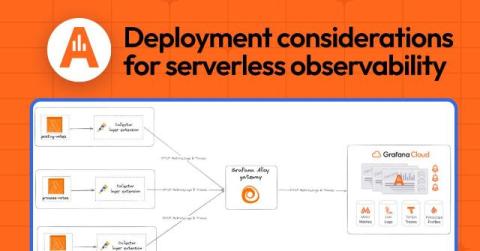
AWS Lambda, OpenTelemetry, and Grafana Cloud: a guide to serverless observability considerations

In our increasingly serverless world, observability isn’t just a “nice to have”—it’s essential. Serverless functions such as AWS Lambda bring incredible benefits, but they also introduce complexities, especially around monitoring and debugging. In a previous article, I provided a quick, practical guide for sending AWS Lambda traces to Grafana Cloud using OpenTelemetry.

Scaling up to 1 Million Requests per Minute: How Cloudsmith Delivers Extreme Performance

CI/CD pipelines don’t wait. When traffic surges and your artifact platform can’t keep up, it’s not just a few slow requests: builds fail, deploys become backlogged, and engineers lose confidence. We’ve seen it all: 502s from overloaded VMs, minutes-long pulls, and pipelines grinding to a halt. That’s why we built Cloudsmith to scale by default; no one should have to firefight with their registry at 2 a.m.