Operations | Monitoring | ITSM | DevOps | Cloud

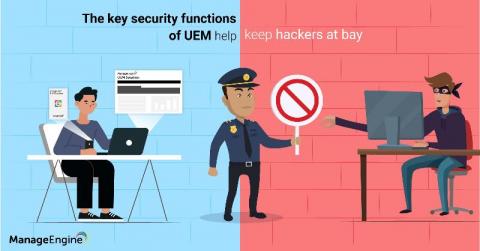
Key security functions of unified endpoint management

As part of digital transformation, the adoption of a wide range of devices for work is on the rise. A unified endpoint management (UEM) solution is capable of enforcing management policies and configurations, as well as securing endpoints. In a previous blog, we reviewed the capabilities of a good UEM solution. In this instalment, we look at UEM security features.
Transaction Monitoring | Upgrades and Use Cases in 2020

Synthetic monitoring takes care of all of the small interactions on our website that QA can’t catch. If you’re building an application for the web, a transaction check is an integral part of proactive downtime resolution. What we call transaction monitoring, or a transaction check, is a set of instructions that a probe server follows.

G Suite: Driving usage, adoption and satisfaction | Product Demo

Discover how Nexthink complements hard technical metrics with user sentiment data to truly understand employees’ experiences of their G Suite usage, enabling IT to take data-led action and engage with employees to improve their overall usage, adoption and satisfaction of the service.

Scheduling IT and Engineering on-call rotations just got easier

It shouldn’t take you more time than a few seconds to understand your on-call schedule and rotations and how you could make changes to it. It is important for on-call scheduling and alerting tools to make this as simple as possible. If you’re spending more than a few seconds to understand what your on-call rotations are going to be like for the next day or week or month, then you need to start looking for a better on-call management tool.

Bring Test Engineering into your DevOps practice

What do a test engineer and a DevOps or SRE team member have in common? The reality is that different teams need to proactively understand what is happening in production at critical milestones along the software engineering delivery cycle. In the words of Abby Bangser, senior test engineer at Moo, “Testing has so much in common with Ops and SRE teams. We need to ask interesting questions of production. We need no more debates whether a bug gets fixed.

Is it a good time(stamp) for centralized logging?

With almost all deployed software systems consisting of multiple moving parts, it’s hard to find arguments against centralized aggregation of log entries. Deployment technologies like lightweight virtualization, Kubernetes, and serverless computing tend to spread out the components of a system across a large number of runtime primitives. Gaining visibility into the state and history of such systems is as important as ever but can also be more difficult than ever.