Operations | Monitoring | ITSM | DevOps | Cloud

Securing AWS Fargate workloads: Meeting File Integrity Monitoring (FIM) requirements

Securing AWS Fargate serverless workloads can be tricky as AWS does not provide much detail about the internal workings. After all… it’s not your business, AWS manages the scaling of underlying resources for you. :) While the security and stability of Fargate’s system is an inherent feature, Fargate follows a shared responsibility model, where you still have to take care of securing those parts specific to your application..

Secure container orchestration at the edge

The cloud-native way of building software allows for consistency across developer environments and massive scalability of application deployments. Both these attributes are useful for edge, but create new challenges related to security and resilience. Watch this demo to see how Canonical’s modular technology stack addresses these challenges by using well-known cloud primitives.

Choosing the Best AWS Serverless Computing Solution

Serverless computing is becoming increasingly popular in software development due to its flexibility of development and the ability it affords to test out and run solutions with minimal overhead cost. Vendors like AWS provide various tools that enable businesses to develop and deploy solutions without investing in or setting up hardware infrastructures. In this post, we’ll cover the many different services that AWS provides for supporting serverless computing.

AWS Fargate runtime security - Implementing File Integrity Monitoring with Sysdig

Thanks to serverless you can focus on your apps, instead of your infrastructure. Take AWS Fargate as an example. A service where you can deploy containers as Tasks, without worrying what physical machine they run on. However, without access to the host How can you detect suspicious activity? Like, file changes on your Fargate tasks? Sysdig provides runtime detection and response to secure Fargate serverless containers.

Datadog Live Containers - Kubernetes Resources

Datadog Live Containers provides multidimensional, real-time visibility into Kubernetes workloads, from Deployments and ReplicaSets down to individual Containers. Using Datadog's curated metrics, teams can track the health and performance of their Kubernetes resources in the appropriate context and surface critical information about every layer of their Cluster.

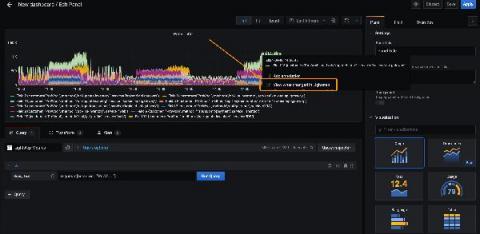
Get started with distributed tracing and Grafana Tempo using foobar, a demo written in Python

Daniel is a Site Reliability Engineer at k6.io. He’s especially interested in observability, distributed systems, and open source. During his free time, he helps maintain Grafana Tempo, an easy-to-use, high-scale distributed tracing backend. Distributed tracing is a way to track the path of requests through the application. It’s especially useful when you’re working on a microservice architecture.

Dynamic Service Graph | Tigera - Long

Downtime is expensive and applications are a challenge to troubleshoot across a dynamic, distributed environment consisting of Kubernetes clusters. While development teams and service owners typically understand the microservices they are deploying, it’s often difficult to get a complete, shared view of dependencies and how all the services are communicating with each other across a cluster. Limited observability makes it extremely difficult to troubleshoot end-to-end connectivity issues which can impact application deployment.