After our initial release of Icinga Reporting for early adopters we continued our development and are happy to release v0.9.1 today. The release includes bug fixes and some minor enhancements for the usability. I want to take this opportunity to write a post aimed at the people who are new to the whole reporting shabang – like me. This week I set out to figuring out for myself why one would need to use reporting and how to get there – and to share my new knowledge with you!
AWS CloudWatch Logs gives you full visibility into your AWS infrastructure, from individual workloads to the services that bind them. Monitoring these logs helps ensure their smooth and continued operation, ongoing stability, and performance. Integrating CloudWatch Logs with LogDNA makes it easier to parse, search, and analyze AWS logs in order to detect anomalies and troubleshoot problems faster.
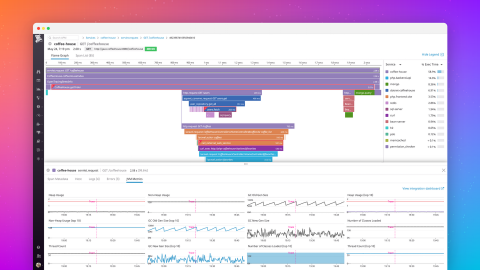
Whether you’re investigating memory leaks or debugging errors, Java Virtual Machine (JVM) runtime metrics provide detailed context for troubleshooting application performance issues. For example, if you see a spike in application latency, correlating request traces with Java runtime metrics can help you determine if the bottleneck is the JVM (e.g., inefficient garbage collection) or a code-level issue.
Serverless first came onto the scene in 2014 when AWS Lambda was launched. It offers a dynamic cloud-computing execution model where the server is run by the cloud provider. As with any relatively recent technology, its novelty results in a steep learning curve, and it comes with its own set of benefits and drawbacks.