Operations | Monitoring | ITSM | DevOps | Cloud

The Place Where Modern Operations & Technology Come Together



NinjaOne Backup - Proven Recovery. Powerful Protection. One Platform.
Today’s IT environments are everywhere spanning endpoints, cloud applications, remote devices, and SaaS platforms. It lives on endpoints, servers, in cloud apps, across home offices, remote devices, and SaaS platforms. But your backup strategy? It’s still fragmented. A patchwork of legacy endpoint tools, bolt-on SaaS protectors, and disconnected consoles. This complexity isn’t just inefficient… it’s dangerous. Blind spots lead to ransomware payouts. Missed restores mean lost productivity.

I Fixed a $30K/Year Anomaly in the Time It Takes to Make Coffee
If you work in FinOps, you know the feeling. You open your recommendations queue on a Monday morning. There are 47 items. You worked through 12 of them last week. You’re back up to 47 again. All represent real money leaving the building, but not all are “bad money” – of those 47, a significant share will be “this is ok, expected, we got value”. That’s what really kills FinOps enthusiasm (and is why the engineer is skeptical towards the FinOps person).

How to manage Ubuntu fleets using on-premises Active Directory and ADSys
The “hybrid fleet” is today’s reality: organizations diversify operating systems while Microsoft Active Directory (AD) remains the dominant identity “source of truth.” IT administrators must ensure Linux machines, like Ubuntu desktops and servers, behave as first-class citizens in this environment.

Accelerate Your OpenTelemetry Migrations With Honeycomb's Agent Skills
Since releasing our hosted MCP server last year, we've been thrilled to see customers not just adopt it but build Honeycomb deeply into their agentic development and observability workflows. Users have embraced it, leveraging Honeycomb to stay in conversation with their code and understand how it runs in production.

Monitoring a Roborock Robot Vacuum With Healthchecks.io
I semi-recently bought a used Roborock S5 Max robot vacuum, and installed Valetudo on it. The installation process involves rooting the robot, and gaining SSH access to it. Which got me thinking, could I get the robot to ping Healthchecks.io at regular intervals? When the robot runs into a problem (closes a door after itself, gets stuck, chokes on a loose wire) and cannot return to the base, it eventually shuts down.
Pull Request Velocity as a Proxy for AI Usage for Software Development
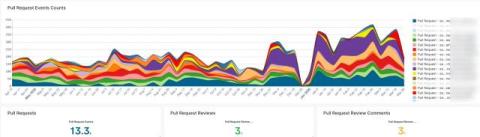
While AI have usage has been growing steadily for the last several years, the LLM models noticeably improved around the end of 2025. Specifically, they become more viable for software development. We are seeing the results. The feature and product delivery has picked up. One way to visualize this is by looking at the number of pull requests for your organization / software development teams. This chart shows the number of Github pull requests created by a team. Can you spot when AI usage increased?
Customer-led, independently proven: Redgate Monitor's G2 Spring 2026 awards
Every quarter, G2 publishes seasonal reports and awards badges based on authenticated customer reviews, not paid ranking, to highlight top-performing B2B software products. For Spring 2026, Redgate Monitor had a standout showing, earning 14 new badges, including several “Best / Most” awards that go to just one single product in every category.

See Why Businesses Choose Cove for Data Protection
In this compilation, customers share why they rely on Cove Data Protection for backup and disaster recovery.

Terraform Vendor Lock-In: How to Escape It | Harness Blog
Discover why Terraform has become a vendor lock-in risk with HashiCorp's licensing changes. This guide explores practical strategies to escape Terraform lock-in, including OpenTofu migration paths and how Harness IaCM enables vendor-neutral infrastructure management across multiple IaC tools.