Operations | Monitoring | ITSM | DevOps | Cloud

Dynatrace vs AppDynamics - A Feature Comparison Guide

Dynatrace and AppDynamics are two of the most well-known Observability and monitoring tools. Even though they share many features, they have several differences that might make you choose one over the other. Dynatrace is great for comprehensive system performance monitoring. It covers everything from infrastructure and application performance to log management and real user monitoring. AppDynamics, on the other hand, focuses more on application performance and business transactions.
WWDC 2024: What IT Admins Need to Know About Apple's Announcements

Apple's announcements at this year’s Worldwide Developers Conference have surprised everyone with new capabilities designed to make the IT admin's life easier for managing and securing devices. As we expected, Apple kept expanding declarative management configurations and capabilities for securing iPhones and iPads and robust management of macOS in the enterprise.

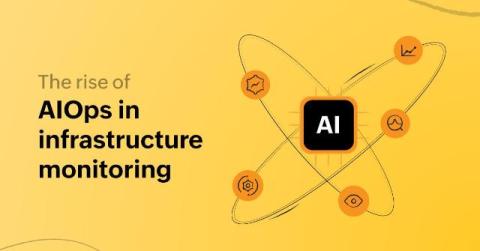
The rise of AIOps in infrastructure monitoring

Drowning in data from complex environments? Ditch the reactive approach. Artificial intelligence for IT operations (AIOps) empowers proactive management with comprehensive observability. According to Gartner, IT spending will continue to mount sky-high despite the global economic instability; the IT expenditure is predicted to surge by 8.6% in 2024. Manual monitoring often fails to keep up with the complexity of modern IT environments, leaving critical issues undetected.

Grafana Alloy 1.3 release: Debug pipelines in real time

Grafana Alloy 1.3 is here! First introduced earlier this year, Alloy is our open source distribution of the OpenTelemetry Collector. It has native pipelines for OpenTelemetry and Prometheus telemetry formats, and it uses the same components, code, and concepts that were previously introduced in Grafana Agent Flow. This new release introduces live debugging, enhancing debugging capabilities across key components, which are the building blocks of Alloy.

Network Performance Dashboard

In this dashboard tutorial video, we will walk you through building a Network Performance dashboard. This dashboard provides users with the visibility they need into the status of their network performance from their offices down to an individual users device. Obtaining this single pane of glass visibility is made easy with the combination of both CloudReady and Service Watch metrics into dashboards. When utilizing these dashboards, users can quickly identify which networks are performing poorly, allowing them to quickly resolve issues and ensure end users have an optimal experience.

How to Send Grafana Alloy Logs to Grafana Loki | Ask the Experts | Grafana

In this video, Matt Durham, Sr. Software Engineer on the Grafana Alloy team, shows you how to send Grafana Alloy logs to Loki. Specifically, we address the question: "Is it possible to send data from one Grafana Alloy to another? Could anyone supply me with config examples of such interactions? If I send data from Grafana Alloy directly to Loki, it is working. If I send data from Grafana Alloy to another, and then to Loki, the second instance gives me an error.".

Comparing Encryption in Transit Options

Weigh up three popular ways to protect your data in transit—host level encryption (TLS/SSH), MACsec, and IPsec—to fortify your network security. Encryption in transit refers to protecting data while it moves from one place to another, in contrast to “encryption at rest” which is used to protect data where it is stored. In this blog we’ll look at a few common options for encryption in transit, and the pros and cons of each from a network perspective.

Manage your infrastructure with ServiceNow CMDB and Datadog

ServiceNow is a popular IT service management platform that helps organizations track and manage enterprise-level IT processes, such as on-prem infrastructure management, customer support, and incident response. By using ServiceNow’s configuration management database (CMDB), organizations can easily centralize and manage information about all the IT objects they own in order to track and maintain them more efficiently.

MELT: Understanding Metrics, Events, Logs and Traces for Effective Observability

The infrastructure must be “invisible” to the user, but visible to IT strategists to ensure the performance and service levels required by the business, where observability (as part of SRE or site reliability engineering) is essential to understand the internal state of a system based on its external results. For effective observability, there are four key pillars: metrics, events, logs, and traces, which are summarized in the acronym MELT.