Operations | Monitoring | ITSM | DevOps | Cloud

How to Fix Poor AWS Latency

Find out how to reduce your latency and get better network performance from the leading cloud service provider. In the modern business world, AWS is everywhere. According to HG Insights, the leading hyperscaler has over 50% market share, with 2.38 million businesses worldwide using AWS cloud services in 2024. One of the top questions we hear AWS users ask is how they can make their AWS connection faster.
Introducing CloudWatch Metric Stream Support in Lumigo

At Lumigo, we are constantly working to help you gain full visibility into your AWS environments with minimal friction. That’s why we’re excited to announce our support for CloudWatch Metric Stream. Now, AWS users can easily send their CloudWatch metrics to Lumigo to create dashboards, set alerts, and unify all their observability data—traces, logs, and metrics—into one powerful, centralized view.

Transformative Assessments in Tidal Accelerator

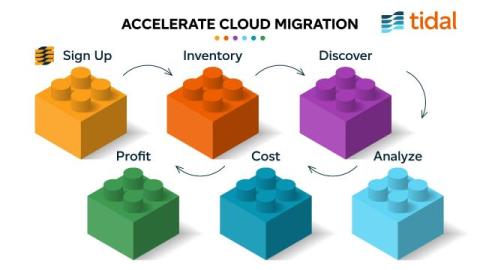
Cloud migrations can be complex, but they don’t have to be overwhelming. With the Tidal Accelerator platform, we’ve simplified the process, enabling organizations to not only migrate to the cloud efficiently by embracing the full spectrum of cloud migration methods, but also plan for a modernized infrastructure that supports long-term success. Here’s how Tidal Accelerator makes it possible.

Kickstart your investigations and reduce alert noise with Doctor Droid's offering in the Datadog Marketplace

Being an on-call engineer is often overwhelming, requiring you to pivot between tickets, dashboards, runbooks, and different data sources as you try to separate legitimate incidents from unnecessary noise. Not only does the process of investigating irrelevant alerts take time away from remediating important issues, but it also compounds alert fatigue.

The three pillars of observability

Do you feel you’re always playing catch-up with incidents? If so, you’re not alone. As IT environments become more complex, alerts keep piling up, and finding the root cause feels like searching for a needle in a haystack. And ITOps and incident responders are left scratching their heads and wondering: what went wrong? It can be frustrating when you don’t have end-to-end visibility into your systems. This is where observability comes in.

Don't let flaky tests disrupt continuous integration

Testing is supposed to help you ship better code, faster. But unreliable tests can leave you rerunning CI, wading through flakes, and questioning your life choices every time a failure blocks your merge. Join the product team that built Test Analytics for a no-fluff session on how they tackle CI-clogging frustrations and what you can do to keep failed and flaky tests from slowing you down—so you can finally merge the d*$@# code.

What's That Collector Doing?

The Collector is one of many tools that the OpenTelemetry project provides end users to use in their observability journey. It is a powerful mechanism that can help you collect telemetry in your infrastructure and it is a key component of a telemetry pipeline. The Collector helps you better understand what your systems are doing—but who watches the Collector? Let’s look at how we can understand the Collector by looking at all the signals it’s emitting.

Anatomy of an OTT Traffic Surge: Netflix Rumbles Into Wrestling

On Monday, Netflix debuted professional wrestling as its latest foray into live event streaming. The airing of WWE’s Monday Night Raw followed Netflix’s broadcasts of a heavily-promoted boxing match featuring a 58-year-old Mike Tyson and two NFL games on Christmas Day. In this post, we look into the traffic statistics of how these programs were delivered.

Network Observability: Boosting NOC Performance in an AI-Driven World

In today’s digital battleground, a business’ survival depends on the robustness and reliability of its network infrastructure. Network connectivity represents the backbone of critical operations and services. Optimized network performance and experience is the lifeblood of corporate success. With the surge in cloud computing and cutting-edge technologies, networks are becoming intricate and multi-layered beasts.