Operations | Monitoring | ITSM | DevOps | Cloud

How to monitor Microsoft SQL Server performance with Grafana Cloud

A database is one of the most critical components for almost every application. Making sure it is running with the expected read and write latencies is paramount. This can be the difference between a smooth, pleasing user experience and a slow, error-filled one that makes your customers turn their back on a product — and never come back.

How to get started with monitoring Apache Cassandra with Grafana Cloud

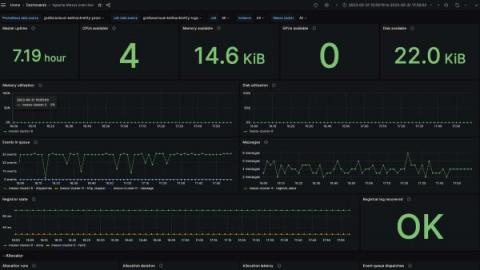
Apache Cassandra is a highly scalable, open source NoSQL database system designed to handle large amounts of data across multiple commodity servers with no single point of failure. Apache Cassandra can be run as a single node but starts making sense when its run in a cluster setup. The system is optimized for high write throughput and is known for its ability to handle big data workloads with ease at super-low latencies.

Scrape Azure metrics and monitor AKS using Grafana Agent

As more organizations adopt cloud-based services like Microsoft Azure Kubernetes Service (AKS), it becomes increasingly important to monitor and manage the performance and reliability of these services. If you’re using AKS today, then Grafana Cloud provides the flexibility, performance, and visualizations you need to monitor your distributed applications.

Grafana Loki 2.8 release: TSDB GA, LogQL enhancements, and a third target for scalable mode

Grafana Loki 2.8 is here — and it’s at least 0.1 better than Loki 2.7! Jokes aside, this release includes a number of improvements users will appreciate. In addition to graduating our TSDB index from Experimental to General Availability, we’ve added a number of nifty LogQL features, and we’ve made the Loki deployment and management experience much easier. This also marks the release of Grafana Enterprise Logs (GEL) 1.7.

Grafana Alerting: A beginner's guide to templating alert notifications

We often see questions about how to template alerts. In Grafana, you can template information about your alerts with custom labels and annotations, and you can also template how notifications look and what information they contain with notification templates. Many users confuse the two, despite being separate features with different use cases.

MetricFire - Dashboards Tutorial

In this video, we explore MetricFire’s powerful dashboarding platform. Discover how to customize your dashboard to view the metrics that matter most to your business. With a variety of visualization options and an intuitive interface, creating and editing charts, tables, and graphs has never been easier. Share your dashboard with your team and keep everyone on the same page. Join MetricFire and start tracking your business metrics today.

Frontend vs. backend: How to plan your performance testing strategy

There are many aspects of application performance, but they broadly fall into two categories: frontend performance and backend performance. As a tester, it’s important to know the differences between the two and how that impacts the way you approach your tests. In this blog, I’ll provide a high-level overview of frontend performance testing and backend performance testing, including pros and cons of each one.